

by Muhammad Rahat
July 14, 2026

Reviewed by Ford
Truck Dispatch Specialist
Truck drivers in the U.S. must stay within weight limits. To do that, you should understand terminologies like gross and tare weight. These two are closely related and create confusion.
Misunderstanding gross weight and tare weights can lead to overloading. This will violate state weight limits. And you will be fined a significant amount of money. Furthermore, it will delay the shipment and hurt your business.
In this complete guide, you will understand the difference between tare weight and gross weight. You will learn how to calculate them. You will also learn why understanding these weights matters for U.S. trucking and profitability.
What Is Tare Weight?
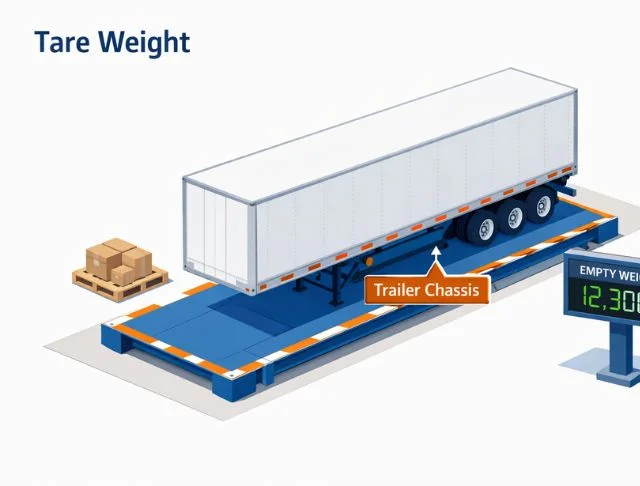
Tare weight is often known as unladen weight. It is the weight of an empty container or vehicle. In bulk transport, tare weight is the weight of the truck without products or cargo. Tare weight helps you determine the real weight of products. It is also useful in transport cost management.
What Is Included in Tare Weight?
Tare weight includes:
- An empty vehicle.
- Attached equipment: a tank, a crane, or a container.
- Essential operating oils: engine oil, transmission oil, and coolant.
- Fuel: a full tank of fuel or a standard minimum amount, depending on regulations.
- Other items: on-board toolkit, extra tire, and jack.
Where Can You Find Your Truck’s Tare Weight?
Finding your truck’s tare weight is very easy. Open the driver’s side door and look for the information sticker. This sticker also shows the tare weight. You can read the vehicle manual for this purpose. Use a public weighbridge to check the tare weight. It should meet standardized measurement and recording requirements. You can also calculate tare weight using the formula if you know the gross and net weights:
Tare weight = Gross weight – Net weight
What Is Gross Weight?
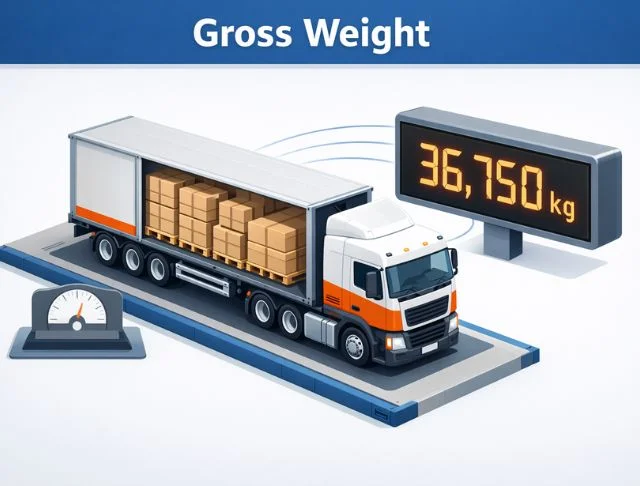
Gross weight is the total weight of a shipment or vehicle. In the trucking industry, gross weight is the combined weight of the cargo, packaging, passengers, and the vehicle. It is the total weight of the vehicle on the road. Knowing the gross weight is important because it affects the legal limits of transport.
What Is Included in Gross Weight?
The following things are included in gross weight:
- Tare weight ( empty vehicle weight)
- Cargo
- packings
- Passengers
- Fuel
Gross Weight vs Gross Vehicle Weight Rating (GVWR)
Gross weight is the weight of a vehicle and its cargo. It changes with every load. It determines the shipment cost and legal weight limits. In comparison, the gross vehicle weight rating is the maximum weight of the vehicle and its cargo. It is the maximum load a vehicle can transport. The vehicle manufacturer assigns the Gross Vehicle Weight Rating, which cannot be changed. It is a critical safety measure. GVWR ensures the vehicle is not overloaded beyond its capacity.
Gross Weight vs Tare Weight: What’s the Difference?
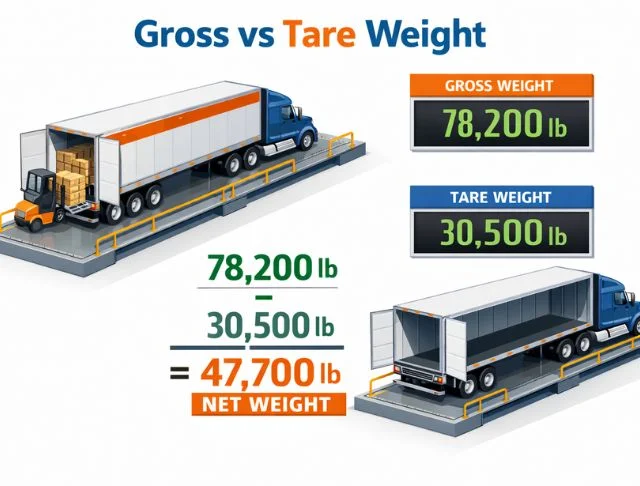
The main difference between the gross weight and the tare weight is the weight of the products. Gross weight includes the weight of cargo. Tare weight has nothing to do with cargo. It is only the weight of an empty truck. Gross weight also accounts for passengers. The same is not true for tare weight.
For example, you are transporting 10,000 lb of mangoes in a 10,000 lb truck. The gross weight of that shipment will be 20,000 lb (mangoes plus truck). And the tare weight will be 10,000 lb (empty truck).
Gross Weight vs Tare Weight Comparison Table
| Points | Gross weight | Tare weight |
| Definition | Weight of the shipment and vehicle combined | Weight of an empty truck |
| What it includes | Truck weightPassengerscargo | An empty Truck weightFuel |
| Main purposes | Calculate shipping feesEnsure transport safetyPlan warehousing and cargo handling | Ensure accurate cargo chargesDetermine product-only weightMeet customs requirements |
What Is Net Weight?
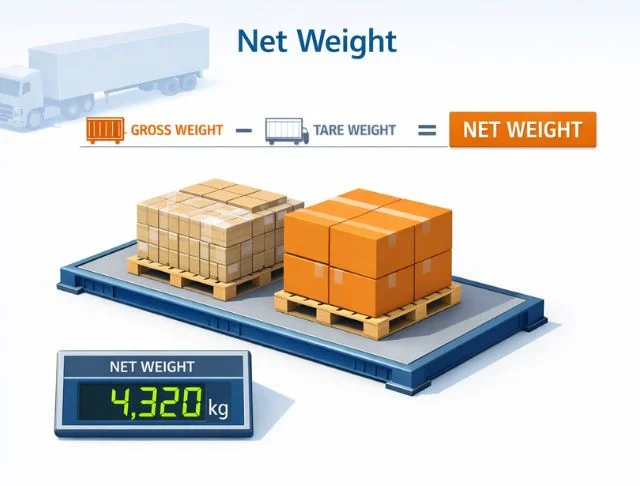
Net weight is the weight of the products only. It does not include the weight of the packaging, container, or anything used to ship the goods. Net weight is the number that matters when it comes to pricing and selling the product.
Gross Weight vs Net Weight vs Tare Weight
Understanding the difference between these weights is important. The weight of the truck and its cargo is the gross weight. The weight of the products is the net weight. And the weight of the empty truck is the tare weight. Gross, tare, and net weight work together for efficient shipping and accurate pricing.
Example: A truck weighing 15,000 lb is transporting 10,000 lb of coffee. Gross weight is 25,000 lb. Tare weight is 15,000 lb. Net weight is 10,000 lb.
How to Calculate Gross Weight
Gross weight is the sum of tare and net weight. You can follow three easy steps to calculate gross weight. These are:
- Find net weight: weigh the products.
- Find tare weight: weigh the empty truck.
- Add them.
Gross Weight Formula
You can calculate gross weight by adding the weight of the products, packaging, and the empty truck together. There is a simple formula to calculate gross weight.
Gross weight = Net weight + Tare weight
Gross Weight Calculation Example
To understand this formula, let us discuss an example. You need to transport 50,000 cans of meat. Each can weighs 200 grams. These cans are packed in boxes and then stacked on wooden pallets. A 30,000 kg truck will deliver them.
Gross weight = (50,000 × 200 g of canned meat) + 30,000 kg (truck) + 3,000 kg (packaging and wooden pallets)
Gross weight = 43,000 kg
This cargo truck will have a gross weight of 43,000 kg (97,800 lbs).
Why Gross Weight Matters in U.S. Trucking
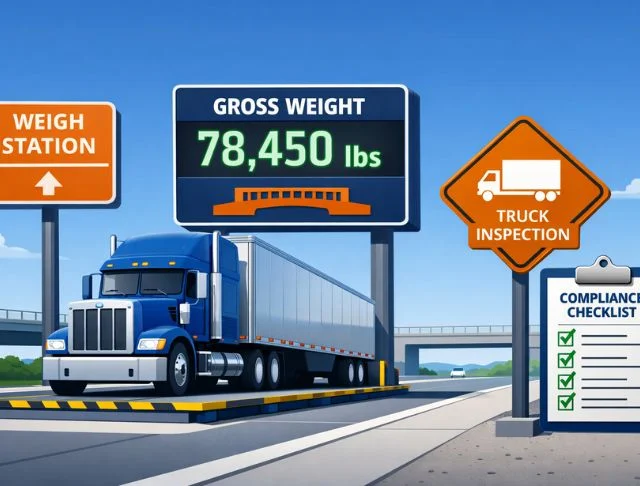
The trucking industry in the U.S. emphasizes gross weight for several reasons. Maintaining the correct gross weight ensures road safety. It impacts the trucks’ brakes. You must know the gross weight to avoid fines and violations of rules and regulations.
Staying Within Federal and State Weight Limits
In the U.S., there are weight limit rules for commercial trucks at the federal and state levels. Both serve the same purpose but vary slightly. The federal limit is set for highways. It protects the roads and bridges. Its weight limit is based on the distance between the axles. The maximum weight for interstate highways is 80,000 pounds.
State weight limits vary by state. It depends upon the roads in each state. If you have heavy cargo, you can get an overweight permit. While in other states, you must carry a lighter weight. Check the state and federal weight limits before the trip. It will save you from violations and fines.
Preventing Overweight Violations and Fines
The U.S. sets weight rules. Violations of these rules can cost you hundreds to thousands of dollars. Cargo weight should be evenly distributed on axles. Otherwise, it will result in a traffic citation. Overweight fines encourage drivers to keep their trucks within the legal weight limit. And this saves time and money. Keep an on-board weighing scale to avoid fines.
Passing DOT Weigh Station Inspections
Passing a Department of Transportation weight station inspection requires careful preparation. One important factor is maintaining gross weight. You should keep the gross weight within the limit. You also need to keep your logbook up to date. Make sure your truck has no safety defects. While passing the DOT station, drive slowly, stay in your lane, and maintain a distance from other trucks.
Protecting Your Truck From Excess Wear
Gross weight impacts a truck’s tires and brakes. Being overweight causes excessive wear on them. It can cause a collision with another vehicle. U.S. weight rules protect trucks from such excess wear. Also, wash off the road salt to prevent rust. Stick to your vehicle maintenance schedule to protect the engine.
Improving Fuel Efficiency and Profitability
Fuel efficiency depends on gross weight. Heavy cargo requires more fuel, increasing fuel combustion. A properly balanced load weight requires less fuel and improves fuel efficiency. This relation plays an important part in profitability. With better fuel efficiency, you can reduce operating costs. Thus, gross weight affects the fuel efficiency and profitability.
How Max Dispatch Uses Gross Weight and Tare Weight
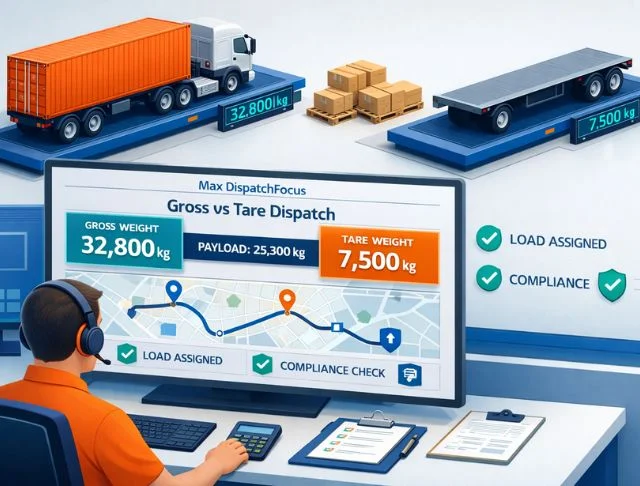
Max Dispatch searches for loads and assigns them to owner-operators based on their truck and capacity. Max Dispatch evaluates every load with tare weight, gross weight, and payload. Their experts calculate vehicle capacity and select suitable freight from brokers. Max Dispatch helps owner-operators get ready to go without any fuss.
Calculating Available Payload
Max Dispatch never selects a load randomly. They calculate it and assign loads to drivers based on gross weight limits. Max dispatch experts select loads from brokers that suit your truck’s correct gross weight.
Matching Loads to Your Truck’s Capacity
Every truck has its own load-carrying capacity. No one knows better than Max Dispatch. They select the load that matches your truck’s capacity. Their experts subtract the tare weight from the legal weight limit and load accordingly.
Avoiding Overweight Freight
By maintaining the gross weight, Max Dispatch never transports overweight freight. They are aware of the violations and difficulties that come with overweight loads. So they avoid loads that exceed weight limits.
Maximizing Revenue Per Load
They know the tare weight and then select the maximum payload without exceeding weight limits. Correct gross weight improves fuel efficiency. Every load handled by Max Dispatch generates maximum revenue. Contact Max Dispatch and find the right load for your truck while keeping your business compliant, efficient, and profitable.