

by Faizan Hassan
June 29, 2026

Reviewed by Ford
Truck Dispatch Specialist
The ability to expose supplier identities, customer information and sourcing networks in shipping documents increases the risk of supplier bypass and customer poaching. This disclosure can harm suppliers’ relationships, lead to lower margins for retailers and reveal valuable supply chain data to competitors.
Blind shipping can mitigate these risks by filling in identifying information on the Bill of Lading (BOL), shipping labels and packing slips prior to shipment. This blog post explains what blind shipping is, how it works, who gets involved and which documents are used, as well as the differences between a single and a double blind shipping, and the challenges faced during its operation.
What is a Blind Shipment?
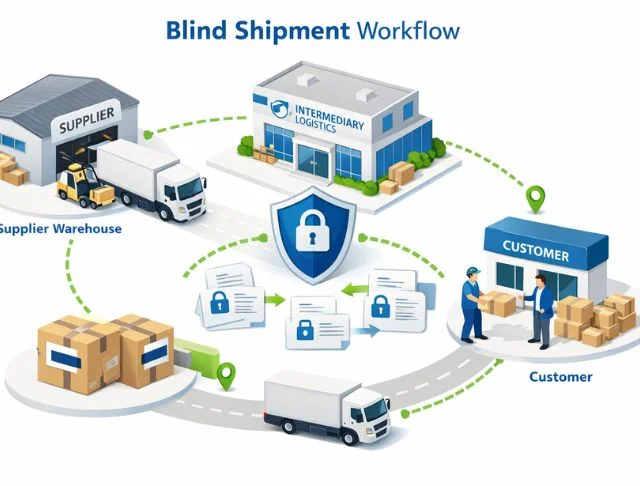
A blind shipment is a shipment that deliberately conceals the identity of one or more parties involved in a shipment from the other party. This kind of delivery keeps the supplier’s information secret, and the customer forever has no idea what supplier or manufacturer it came from. This shipment may seem to be from the retailer the customer ordered from, but instead was fulfilled by a third party and shipped. The label, bill of lading and such are marked with the retailer’s brand, name and contact details, not the supplier’s to hide the supplier’s identity.
Such concealment is done by suppliers because if the supplier’s identity were disclosed then a customer might be able to avoid the retailer and go directly to the supplier, and the retailer’s profits would be lost. This information is concealed from every party to the shipment, including suppliers, manufacturers, distributors and freight carriers, for the benefit of the business. Blind shipping is a common legal practice in shipping, wholesale distribution and online retail and there is no restriction or regulation to disclose the identity of the manufacturer or supplier.
Why Businesses Use Blind Shipments
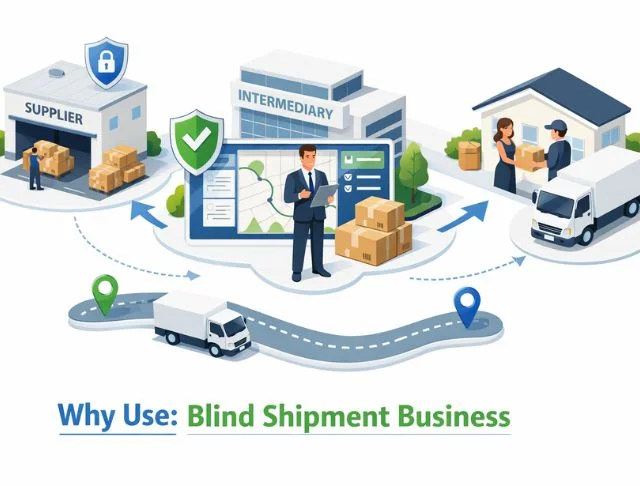
Businesses are using blind shipments to ensure supplier and customer confidentiality, not allowing partners to be bypassed, keep competitive relationships intact and ensure a higher level of control of the supply chain. These reasons can be elaborated on in the paragraphs below.
1. Protect Supplier Confidentiality
Businesses may go through blind shipments for the first reason to secure supplier’s confidentiality. Retailers, distributors, wholesalers and dropshipping companies tend to spend considerable time and energy in cultivating good supplier relationships which they deem to have a competitive edge. Consumers can use a shipping label or bill of lading to tell the manufacturer their name and for future orders, skipping the retailer completely. Blind shipments allow businesses to keep their supplier relationships exclusive, avoid channel bypass and even retain their customers and profit margins by replacing the supplier’s information on shipping documents with the retailer’s information.
2. Maintain confidentiality of Customer information.
Blind shipping is another reason used by businesses to protect customer information. Customer lists are one of the most important assets for retailers, distributors and wholesalers – and they are developed over the years of marketing and selling and managing the relationships. Either the supplier can contact the customer directly, or the information can be passed on to other suppliers to build customer relationships with each other’s competition. Here comes blind shipment, which helps businesses safeguard their customer base, preserve long-term client relationships and stay in control of future sales opportunities by hiding customer information on shipping documents.
3. Prevent Competitive Risks
The third reason for doing a blind shipment is to avoid competitive dangers. Shipping documents frequently include important business data, like the identity of suppliers, customer names, warehouse locations, sourcing networks, and fulfillment partners. Sharing these details may provide suppliers, customers or competitors with information they can exploit to repeat the strategy of the supply chain, exploit existing business relationships, or to avoid the intermediaries. Blind shipments help mitigate this risk by hiding the sensitive data of the supplier, the customer and the fulfillment locations.
4. Ensure Supply Chain Protection
Businesses use blind shipments for the fourth reason to shield supply chain from being bypassed. Shipping papers which expose trader, distributor or retailer identification information can help the parties to find methods around present distribution channels and forge immediate business relationships. To avoid this, blind shipments can be used to mask selected identities, safeguard distribution agreements, retain long-term partnerships, and ensure integrity of the supply chain.
Single Blind vs. Double Blind Shipping
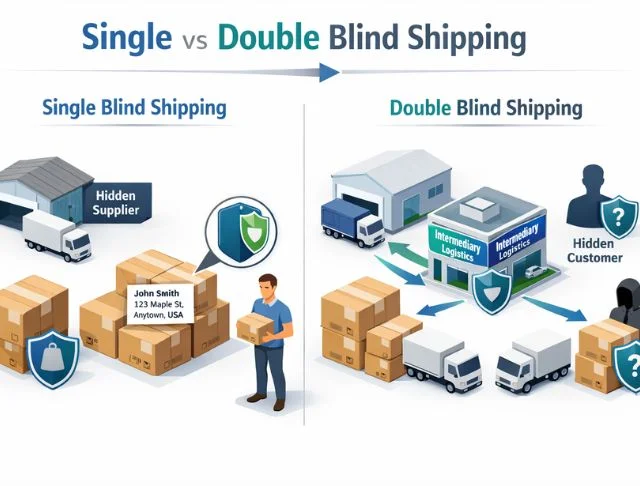
The difference between single blind and double blind shipping is discussed in the table given below.
| Attribute | Single Blind Shipping | Double Blind Shipping |
| Identity Hidden | Only one party’s identity, typically the supplier or manufacturer, is concealed. | Both the supplier’s and the end customer’s identities are concealed from each other. |
| Who Knows Whom | The supplier knows the customer, but the customer does not know the supplier. | Neither the supplier nor the customer knows each other’s identity. |
| Primary Objective | Protect supplier confidentiality and the retailer’s business relationship. | Protect both supplier and customer confidentiality. |
| Shipping Documents | Display the retailer’s information instead of the supplier’s. | Remove or replace identifying details for both parties. |
| Bill of Lading | Shows the retailer or intermediary instead of the supplier. | Structured so neither party can identify the other. |
| Customer Visibility | Customers only see the retailer’s branding and contact information. | Customers cannot identify the supplier, and suppliers cannot identify the customer. |
| Third-Party Involvement | Usually not required. | Typically requires a freight broker, 3PL, or logistics provider to manage documentation and communication. |
| Level of Confidentiality | Moderate confidentiality. | Maximum confidentiality. |
| Operational Complexity | Simpler to implement and manage. | More complex due to additional coordination and documentation. |
| Communication Flow | Communication is usually between the retailer and supplier. | Communication is routed through an intermediary to keep both parties anonymous. |
| Risk of Channel Bypass | Prevents customers from bypassing the retailer to reach the supplier. | Prevents both suppliers and customers from bypassing intermediaries or existing business relationships. |
| Supply Chain Transparency | Partial visibility is maintained. | Visibility is minimized for all involved parties. |
| Administrative Effort | Lower documentation and coordination requirements. | Higher administrative effort to maintain anonymity. |
| Cost | Lower implementation cost. | Higher cost due to intermediary services and additional coordination. |
| Common Use Cases | Dropshipping, private labeling, and retailer-to-customer fulfillment. | High-value B2B transactions, confidential sourcing, government contracts, and sensitive distribution networks. |
| Best Suited For | Businesses primarily who protect supplier identities. | Businesses requiring complete confidentiality between suppliers and customers. |
| Main Business Benefit | Preserves retailer margins by preventing direct sourcing from suppliers. | Protects the entire supply chain by preventing direct relationships between trading partners. |
Who’s Involved in a Blind Shipment?
A blind shipment can involve multiple parties, including the manufacturer, distributor, supplier, retailer, customer, carrier, freight broker, and third-party logistics (3PL) provider. Each of these parties plays a specific role in fulfilling the shipment while maintaining the required level of confidentiality.
- Manufacturer: The manufacturer produces the goods and often fulfills blind shipment orders directly while keeping its identity hidden from the customer.
- Distributor: The distributor purchases products in bulk from manufacturers and supplies them to retailers, serving as an intermediary in the supply chain.
- Retailer: The retailer sells the product to the customer and appears as the shipper on blind shipment documents, regardless of who fulfills the order.
- Supplier: The supplier is the party that provides the product for shipment and may be the manufacturer, distributor, or another inventory source.
- Customer: The customer is the final recipient of the shipment and typically has no visibility into the actual supplier or fulfillment process.
- Carrier: The carrier is the transportation company responsible for delivering the shipment while following blind shipping documentation and labeling instructions.
- Freight Broker: The freight broker arranges transportation between shippers and carriers while coordinating shipments without disclosing confidential party information.
- Third-Party Logistics (3PL) Provider: A third-party logistics (3PL) provider manages warehousing, fulfillment, transportation, and shipping operations while maintaining confidentiality throughout the blind shipment process.
What a Blind Shipment is and how it really works
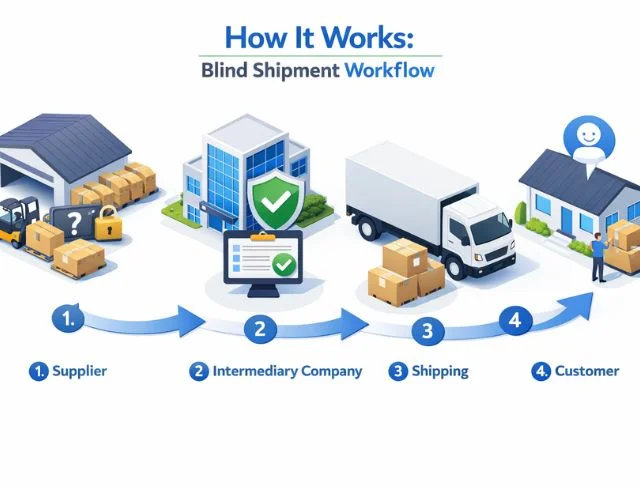
There are four important steps in a blind shipment order, they are order routing, order fulfillment, direct shipping and logistics coordination. This type of shipment is done in the following steps for efficient delivery without disclosing the identity of the supplier.
The step-by-step process of blind shipment working is given below.
1. Order Routing
The blind shipment process starts with the ordering of a product by a customer from the retailer. The retailer takes the order and passes it on to the supplier or manufacturer who is responsible for fulfilling the order.
2. Order Fulfillment
The supplier processes the order based on the instructions from the retailer to make it blind for shipping. The supplier replaces or omits their branding or identifying information on shipping labels and paperwork before sending off.
3. Direct Shipping
After the ordering is done, the supplier will ship it directly to the customer, bypassing the retailer to avoid an additional shipping process, decrease the shipping time and transportation expenses.
4. Logistics Coordination
While the shipment is underway, the retailer, carrier, freight broker, or third party logistics provider works together to manage shipping labels, documents, tracking and invoicing to make sure the shipment arrives at the customer’s door while keeping the information confidential.
The paperwork: What changes on a blind shipment
The paperwork involved in a blind shipment usually consists of the Bill of Lading (BOL), shipping labels, packing slip, commercial invoice (if crossing borders), freight bill, delivery receipt / proof of delivery (POD), customs paperwork (if crossing borders) and more shipping documents depending on the carrier. These documents are examined or modified so as to not reveal the identity of the supplier.
- Bill of Lading (BOL): The primary freight document that details the shipper, consignee, carrier and shipment that has been amended to include the retailer or intermediary as opposed to the actual supplier.
- Shipping Label: The package label with the shipper’s and recipient’s information changed to include the retailer’s information to hide the identity of the supplier.
- Packing slip: A document that lists all the contents of the shipment, except for the details of the supplier, their branding and contact details.
- Commercial Invoice – International Shipments: Customs document that prepares the product, shipment, valuation information, and can be prepared so that the supplier does not disclose information as allowed by trade regulations.
- Freight Bill: The carrier’s shipping bill of lading that lists freight rates and payment terms that corresponds to the blind shipping arrangement.
- Proof of Delivery (POD): Document or electronic document showing successful shipment and maintaining shipment confidentiality.
- Customs Documentation (Cross-Border Shipments): Gathering all customs documentation needed for import/export clearance, while safeguarding customer information as much as possible.
- Carrier Shipping Document: Records to track, route and transport shipping information to ensure accurate delivery and synchronization with the updated shipping information.
Identify operational trade-offs and challenges
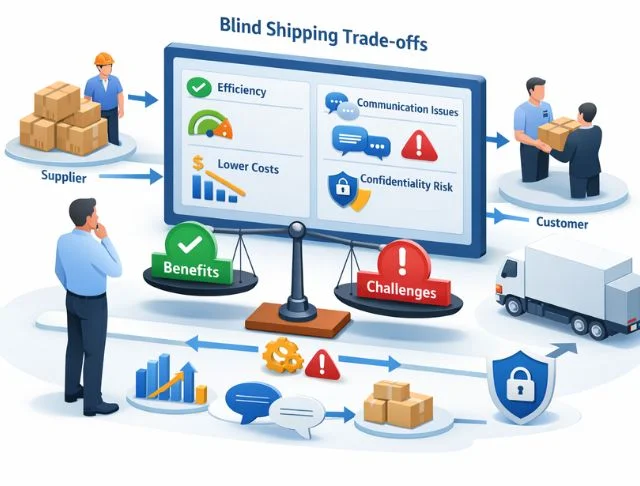
Operational issues with blind shipment include quality control, returns management, visibility of inventory and supply chain coordination. If not managed properly, these can impact the accuracy of fulfillment and the customer experience. Addressing these challenges requires collaboration with trusted suppliers, implementing inventory management systems, and implementing clear return policies and communication with partners throughout the supply chain.
Quality Control
In blind shipping, retailers have less control over the product because suppliers are responsible for storage, packing and fulfillment, which is an activity of quality control to make sure that products are delivered to customers consistently according to the established quality standards. Minimizing this QC risk is possible by selecting quality assured providers, performing periodic quality checks and setting up quality assurance guidelines.
Returns Management
In blind shipping, returns are sent to suppliers or third party logistics providers rather than the retailer, whereas returns management involves receiving, inspecting and processing of returned products. Setting up standard return processes, customer instructions, and reverse logistics workflows can boost return efficiency.
Inventory Management
While inventory management involves monitoring stock levels and meeting customer orders, with blind shipping, inventory stays with the supplier and the retailer only has a view of inventory when it is shipped. One way to address this challenge is for businesses to implement real-time inventory synchronization and automated stock updates between suppliers and retail systems.
Frequently Asked Questions
Is blind shipping legal?
Yes, blind shipping can be legal as long as the shipping documents (or Bill of Lading), shipping documents and customs paperwork meet carrier and transportation regulations. It is used widely in the dropshipping, wholesale distribution and private labeling business for safeguarding supplier or customer identity.
What is the difference between Blind Shipping & Dropshipping?
Blind shipping and dropshipping are different because they are used for different purposes, perform different functions, and have different applications. Blind shipping or dropshipping refers to shipping where the retailer does not reveal the supplier or customer’s identity when the item is sent to the customer, or the supplier sends the product directly to the customer.
Which businesses benefit the most from blind shipping?
The businesses that benefit most from blind shipping are dropshipping businesses, eCommerce retailers, wholesalers, distributors, manufacturers, private label brands, and multi-vendor marketplaces that need to protect supplier relationships, customer information, and brand identity while fulfilling orders directly to customers.
Can blind shipments be used for international shipping?
Yes, blind shipments can be used for international shipping provided documents such as the Commercial Invoice, Bill of Lading (BOL), Packing List, Certificate of Origin, and customs declaration forms comply with the import and export regulations of the destination country while maintaining the required level of confidentiality.