

by Faizan Hassan
Jun 24, 2026

Reviewed by Ford
Truck Dispatch Specialist
Lack of reliable proof is one of the most common problems in logistics, which results in confusion even when tracking shows a shipment as “delivered.” Customers often cannot trust delivery status, leading to missing confirmations and frequent disputes. In such cases, customers may claim non-receipt, carriers struggle to verify delivery details, and businesses are left managing delays, repeated inquiries, and financial disagreements.
Proof of Delivery (POD) solves this issue by confirming successful delivery with verified details such as delivery time, location, recipient identity, signatures, tracking data, and photographs. Electronic Proof of Delivery (ePOD) systems capture and store this information in real time, improving transparency, reducing disputes, and ensuring accurate delivery verification.
The following blog post explains what Proof of Delivery is, how it works, what information it contains, and why it is essential for businesses, carriers, and customers.
- What Is Proof of Delivery (POD)?
- What Information Is Included in a Proof of Delivery Document?
- How Does Proof of Delivery Work?
- Types of Proof of Delivery
- Electronic Proof of Delivery (ePOD): The Modern Standard
- Operational, Legal, and Dispute Resolution Benefits of Proof of Delivery
- Role of Proof of Delivery in Logistics Operations and Business Functions
- Best Practices for Managing Proof of Delivery Records
- Frequently Asked Questions
What Is Proof of Delivery (POD)?
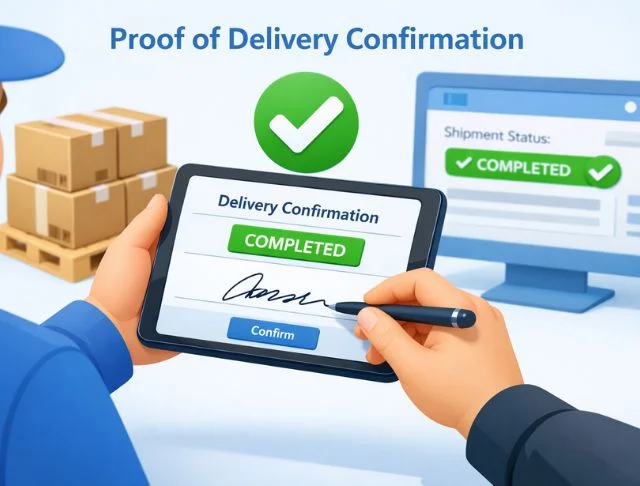
Proof of Delivery (POD) is a formal document or digital confirmation that verifies a shipment has reached its intended recipient. This document acts as concrete evidence that the logistics provider has completed the delivery process and handed over the goods to the correct person or authorized representative.
POD records key delivery details such as the time, date, location, and recipient signature or digital acknowledgment. This creates a reliable trail that can be reviewed by shippers, carriers, and customers whenever there is a need to confirm that the delivery was completed.
One of the most important roles of Proof of Delivery is establishing accountability in the supply chain. It clearly marks the point at which responsibility for the goods shifts from the carrier to the recipient, helping reduce confusion around loss, delay, or damage claims.
What Information Is Included in a Proof of Delivery Document?
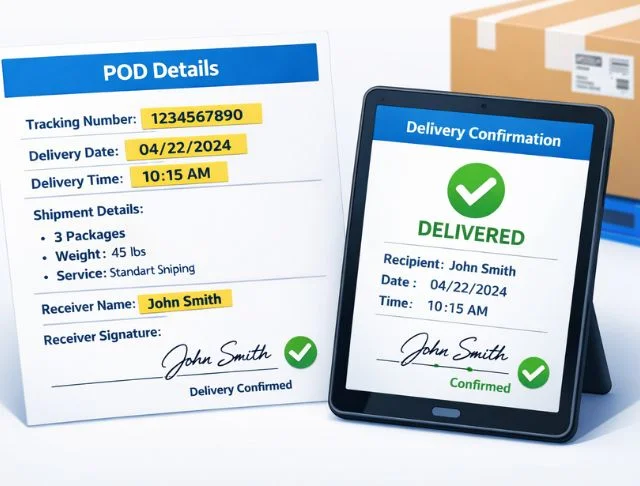
The information included in a POD document is recipient details, shipment identification information, delivery verification information, and delivery evidence details. This information will create multiple layers of verification that help carriers and businesses demonstrate successful delivery while making a verifiable record.
Recipient Details
The recipient details included in a Proof of Delivery (POD) document are listed below:
- Recipient name
- Recipient signature
- Verification status
- Consignee confirmation
- Authorization check
Shipment Identification Information
Shipment identification information in a Proof of Delivery (POD) document consists of essential details that uniquely identify the delivery record and link it to a specific order or shipment.
- Tracking number
- Shipment reference number
- Package weight
- Shipment description
- Carrier information
Delivery Verification Information
Delivery verification details in a Proof of Delivery (POD) document serve as recorded evidence of the exact time and location of delivery, confirming that the shipment has been successfully completed.
- Delivery date
- Delivery timestamp
- Delivery address
- Delivery location details
Delivery Evidence Records
The delivery evidence records included in Proof of Delivery systems are listed below.
- Recipient signatures
- Photographs
- Driver notes
- Delivery status confirmations
- Multi-layer verification records
How Does Proof of Delivery Work?
The Proof of Delivery process includes shipment dispatch and tracking, the delivery driver verification process, and delivery confirmation and record creation. It ensures shipments are tracked, verified on delivery, and formally recorded for accountability.
The process of POD working is given below.
Shipment Dispatch and Tracking
The Proof of Delivery (POD) process begins once a shipment is dispatched and enters the transportation network for onward movement. Tracking systems continuously monitor the shipment and provide real-time updates on its location and status. This tracking information allows both customers and businesses to stay informed about shipment progress and estimate accurate delivery times. Delivery personnel prepare to gather and record all required information needed to complete the Proof of Delivery process accurately as the shipment approaches its destination.
Delivery Driver Verification Process
Delivery drivers verify the recipient and collect Proof of Delivery (POD) information upon arrival at the delivery location for proper handover. Drivers may obtain a signature, scan shipment barcodes, take delivery photographs, confirm recipient identity, and record delivery notes to validate the transaction. This verification ensures delivery accuracy, reduces errors, and creates reliable documentation that supports accountability in the delivery process.
Delivery Confirmation and Record Creation
Delivery confirmation and record creation begin by storing all collected Proof of Delivery (POD) information as an official delivery record after the shipment is completed. The process then compiles key delivery details such as delivery time, recipient information, photographs, signatures, and location data into a structured record. It establishes a permanent audit trail that supports customer service, compliance requirements, billing processes, and dispute resolution activities.
Types of Proof of Delivery
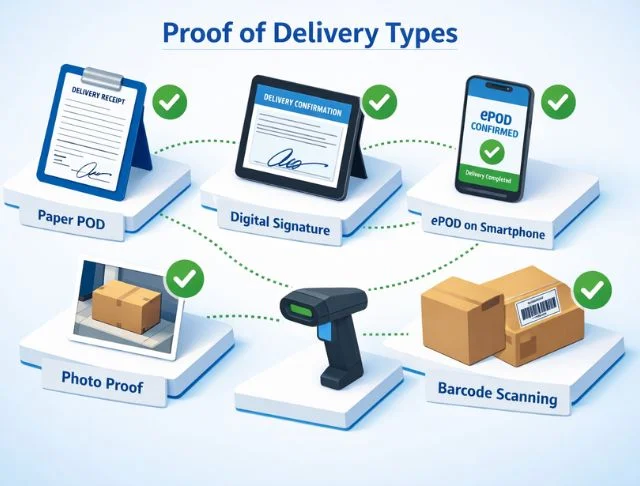
The types of Proof of Delivery are Traditional Paper Proof of Delivery, Electronic Proof of Delivery (ePOD), Signature-Based Proof of Delivery, and Picture Proof of Delivery. Different Proof of Delivery types exist because different shipments require different levels of verification based on value, risk, and infrastructure, ensuring the right balance of accuracy, security, and efficiency in each case.
- Traditional Paper Proof of Delivery: Traditional Paper Proof of Delivery is a manual POD method that uses physical documents signed by recipients at delivery, recording basic shipment and recipient details, but relies on paper-based storage, making retrieval and long-term management difficult.
- Electronic Proof of Delivery (ePOD): Electronic Proof of Delivery (ePOD) is another type that replaces paper documentation with digital records captured via mobile devices and logistics software, enabling real-time entry, instant storage, and efficient access to delivery information.
- Signature-Based Proof of Delivery: Signature-Based Proof of Delivery is a POD type that uses recipient signatures on paper or digital devices as formal confirmation that the shipment has been successfully received by the intended person.
- Picture Proof of Delivery: This method uses photographs taken by delivery personnel at the delivery location to visually confirm that the shipment has been successfully delivered and properly placed.
Electronic Proof of Delivery (ePOD): The Modern Standard
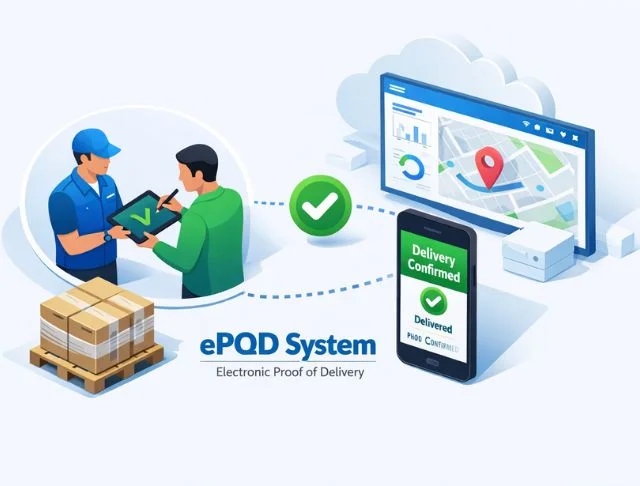
Electronic Proof of Delivery (ePOD) is a digital system that captures, stores, and manages delivery confirmation records using mobile devices instead of paper forms for fast and accurate data collection. It uses key technologies such as digital signatures for recipient acknowledgment, barcode scanning for quick identification, and GPS tracking to verify delivery locations. These features improve verification accuracy, reduce manual errors, and create reliable delivery records. Cloud-based storage further allows secure archiving and easy access to delivery data for audits, compliance, and customer service needs.
Operational, Legal, and Dispute Resolution Benefits of Proof of Delivery
POD provides different operational, legal, and dispute resolution benefits such as real-time tracking updates, verified recipient signatures, GPS delivery location proof, and timestamped delivery records. It also supports contract enforcement, regulatory compliance, and resolution of missing, damaged, and delivery disputes using photographic evidence and detailed delivery logs.
Operational Benefits of Proof of Delivery
Proof of Delivery creates verified shipment completion records that improve delivery accuracy and customer confidence through timestamps, signatures, photographs, and structured delivery data. It enhances shipment visibility by linking POD records with tracking systems, enabling real-time monitoring from dispatch to final delivery and improving reporting accuracy and customer support response time.
Security and Claims Resolution Benefits
Proof of Delivery reduces theft risks and fraudulent claims by providing verified delivery evidence such as GPS coordinates, recipient acknowledgment, and photographic proof of package placement. This evidence improves claims processing by clearly validating delivery conditions, timing, and recipient details for accurate and faster dispute resolution.
Legal and Compliance Benefits
Proof of Delivery serves as formal evidence of shipment completion and contract fulfillment between suppliers, carriers, and customers. It establishes a chain of custody and ownership transfer at delivery and supports regulatory compliance through auditable records required for inspections, reporting, and internal governance.
Dispute Resolution and Problem Handling Benefits
Proof of Delivery helps resolve delivery issues such as missing shipments, damage claims, and customer disputes using objective evidence, including signatures, timestamps, photographs, and GPS data. This documentation enables faster, fair, and evidence-based resolution while improving overall service reliability and reducing uncertainty.
Role of Proof of Delivery in Logistics Operations and Business Functions
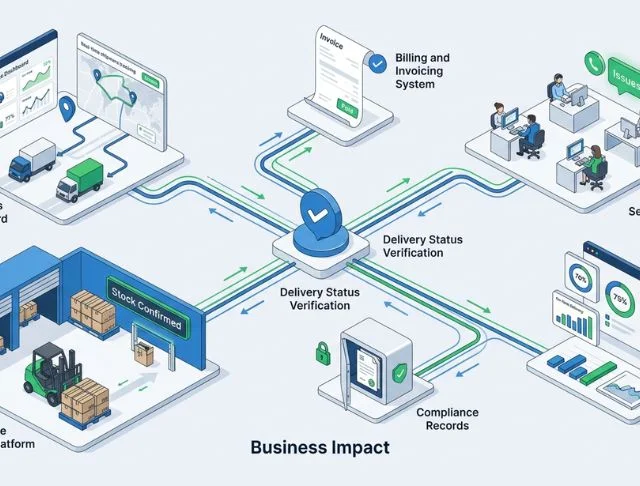
Proof of Delivery improves logistics operations by confirming last-mile delivery completion, increasing supply chain visibility, and creating reliable audit trails that support performance tracking and efficient shipment management across enterprises.
POD also supports business processes by validating invoices for payment, ensuring regulatory compliance, and providing trusted delivery confirmation through carriers like USPS and FedEx. It also clearly separates delivery proof from pre-shipment documents such as a Bill of Lading.
Last-Mile Logistics Role & Supply Chain Transparency
Proof of Delivery confirms that last-mile delivery is completed by ensuring shipments reach the correct destination with verified delivery records. It also improves supply chain transparency by recording shipment outcomes and enabling clear information sharing between businesses, carriers, and customers to improve visibility of delivery performance and service quality.
Audit Trail, Performance Monitoring & Enterprise Management
Proof of Delivery creates detailed audit trails that include signatures, timestamps, and delivery evidence for investigations, carrier evaluation, and compliance checks. It supports performance monitoring through key metrics like delivery accuracy and on-time rates that help organizations identify gaps and improve logistics efficiency. In enterprise operations, bulk POD systems make it easier to manage high shipment volumes through simplified reporting, auditing, and customer service workflows.
Invoice Validation & Financial Processing
Proof of Delivery supports invoice validation by confirming that shipments are completed before payment is released, which will reduce billing errors and disputes. It also ensures accurate financial processing in business transactions and helps build trust between trading partners.
Carrier Systems: USPS & FedEx Proof of Delivery
USPS provides Proof of Delivery services that offer delivery confirmation and optional signature verification for eligible shipments. FedEx provides electronic POD records that include recipient details, delivery dates, and signatures, which can be accessed through its tracking systems for verification.
Proof of Delivery vs Bill of Lading
A Bill of Lading is a pre-shipment contract between the shipper and carrier, while Proof of Delivery is a post-delivery confirmation that verifies successful receipt of the shipment, together ensuring complete end-to-end logistics accountability.
Best Practices for Managing Proof of Delivery Records
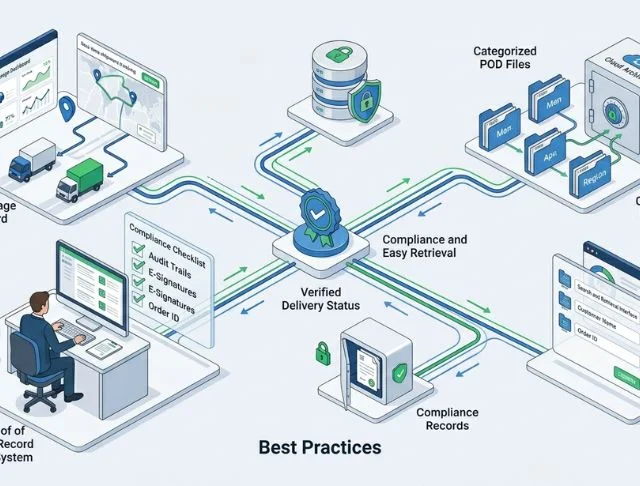
Best practices for managing Proof of Delivery (POD) records include capturing accurate delivery information, using digital verification methods, maintaining secure storage, ensuring compliance documentation, and creating accessible audit trails. Businesses should follow these practices for operational accuracy, audits, dispute resolution, and regulatory compliance.
The best practices for managing proof of delivery records are given below.
- Capture accurate delivery details such as recipient name, signature, timestamp, and delivery location for reliable Proof of Delivery records.
- Use digital verification methods like e-signatures, barcode scanning, and GPS tracking to improve accuracy and reduce manual errors.
- Maintain secure electronic storage systems, preferably cloud-based, to protect POD records and ensure easy retrieval when needed.
- Ensure compliance documentation by keeping POD records aligned with legal, regulatory, and contractual requirements for audits and reporting.
- Create accessible audit trails that clearly track delivery history, supporting investigations, performance reviews, and dispute resolution.
Frequently Asked Questions
Is Proof of Delivery Legally Binding?
Yes, Proof of Delivery (POD) can serve as legally admissible evidence that a shipment was successfully delivered. However, its legal validity depends on the information captured, such as signatures, timestamps, or delivery photos, and the laws and regulations of the specific jurisdiction.
What Is the Difference Between POD and Tracking Information?
Tracking information provides updates on a shipment’s location and progress while it is in transit. Proof of Delivery (POD), on the other hand, confirms that the shipment reached its destination and was successfully delivered, often with supporting details such as a signature, timestamp, or delivery photo.
Can a Delivery Photo Be Used as Proof of Delivery?
Yes, a delivery photo can be used as Proof of Delivery (POD) and is widely accepted in modern electronic Proof of Delivery (ePOD) systems. It provides visual evidence that the package was delivered and helps verify the delivery location, package condition, and successful delivery completion.
How Long Should Businesses Keep POD Records?
The retention period for Proof of Delivery (POD) records depends on legal requirements, industry standards, and company policies and is typically long enough to support audits, disputes, and compliance checks.
What Happens If Proof of Delivery Is Missing?
If Proof of Delivery (POD) is missing, it can be challenging to confirm that a shipment was successfully delivered and may lead to disputes, delays, or customer claims. To avoid these issues, businesses should use reliable processes to capture, store, and manage delivery records accurately.