

by Muhammad Zubair
Jun 24, 2026

Reviewed by Ford
Truck Dispatch Specialist
Truck driving is one of the most challenging careers in America, and having to load and unload heavy cargo at different stops makes it even harder. Drivers who are dealing with touch freight may face back injuries due to heavy lifting, cargo damage disputes, and several other exhausting things.
To avoid all this burden, a no-touch freight option is introduced where drivers just need to transport it from one point to another with zero responsibility for physically loading and unloading cargo. Everything is handled by warehouse personnel on both ends. If you are a truck driver in America, you can also make your life easy with no-touch freight.
You will get all the details, such as the meaning, process, benefits, jobs, and salaries, about no-touch freight in this blog post.
What Is No-Touch Freight in Trucking?
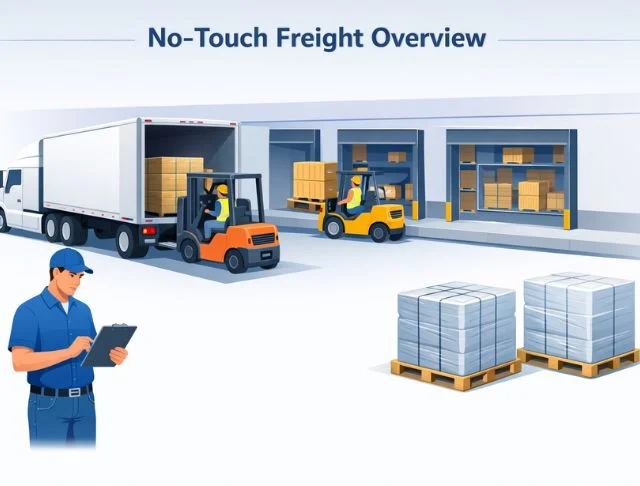
No-touch freight is a shipping arrangement in trucking where the driver carries zero responsibility for physically loading cargo onto the trailer at the origin or unloading it at the destination. You all know that there are different responsibilities in freight handling, such as staging, stacking, sorting, wrapping, and placing goods inside the trailer. In no-touch freight, all these things are managed by warehouse employees, shipper staff, or consignee crews at their respective facilities. There are specific types of items that are included in no-touch operations, including consumer goods, retail products, food, beverages, and various commercial materials.
Who Loads and Unloads No-Touch Freight?
Warehouse staff and shipper employees are the ones who will load and unload the freight. They handle everything from staging and organizing the cargo to physically placing it onto the trailer before the driver is ever given the green light to roll. Once the truck reaches its destination, it’s the consignee’s dock crew that takes over will handle all unloading responsibilities from start to finish. This division of labor makes no-touch freight so operationally efficient that every party knows their role, the freight moves faster, and drivers walk away without the physical wear and tear that comes with touch freight loads.
What Does a Truck Driver Do With No-Touch Freight?
A truck driver will do a safe and timely transportation of cargo between the shipping and receiving locations, while all physical freight handling is handled by facility personnel with no-touch freight. When they arrive at the pickup, they will conduct pre-trip inspections, verify trailer seals, cross-check shipping documents for accuracy, and confirm delivery appointments with dispatch. On the road, they will focus on getting that load delivered safely and on time. Once they reach the destination, post-trip inspections and closing out paperwork wrap up the haul. The freight handling may belong to the warehouse crew, but the load’s safe arrival from Point A to Point B will be the responsibility of the driver.
How Does No-Touch Freight Work?
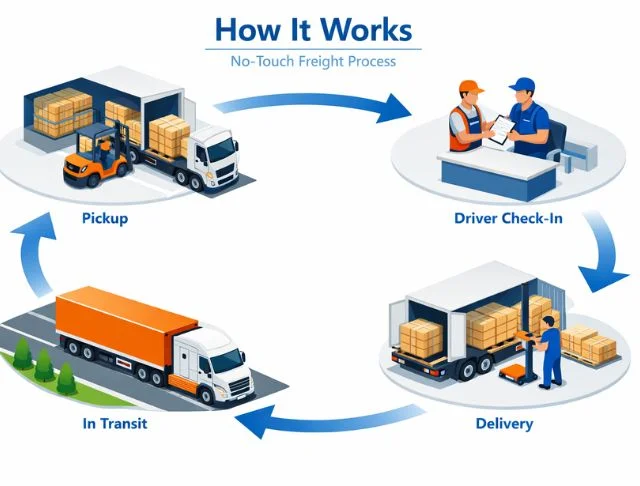
No-touch freight works through a structured process that begins with freight preparation by the shipper, followed by the driver’s arrival at the pickup facility, a pre-trip inspection, departure for the destination, and ongoing communication with dispatch throughout the haul. The next steps of this process include the driver’s arrival at the consignee’s facility, unloading by the consignee’s dock crew, completion of delivery documentation, and finally, the driver preparing for the next assignment.
Step 1: Freight Is Prepared by the Shipper
The process of no-touch freight starts with the loading and securing of freight by the shipper’s warehouse team onto the trailer before the driver ever sets foot on the facility. They stage, organize, wrap, and load the cargo according to the shipment requirements. Everything is already locked, loaded, and ready to move before the driver’s arrival.
Step 2: Driver Arrives at the Pickup Facility
Now, the driver’s duty starts by checking in at the shipper’s facility, presenting the required paperwork, and getting assigned to their loaded trailer. Truck driver conducts a thorough pre-trip inspection, checks the trailer seals, verifies the shipping documents, and confirms that everything lines up before officially accepting the load.
Step 3: Driver Departs for the Destination
After signing the paperwork and clearing the trailer, the driver starts the truck and put it on the road for safe arrival on time.
Step 4: Driver Communicates With Dispatch En Route
The driver needs to stay in regular contact with their dispatcher to keep the entire logistics chain running smoothly throughout the haul. They provide location updates, flag any potential delays, and confirm that the delivery appointment window is still on track.
Step 5: Driver Arrives at the Consignee’s Facility
Upon arrival at the destination, the driver checks in to hand over the delivery paperwork and presents the trailer for unloading, and now again, the driver’s involvement with the freight ends. The driver does not participate in unloading in any way, as that responsibility belongs entirely to the consignee’s warehouse crew.
Step 6: Consignee’s Team Unloads the Freight
The consignee’s dock workers take over the responsibility completely and unload all the items from start to finish. They unload, sort, and receive the freight according to their internal procedures while the driver waits on site, without doing anything throughout the entire process.
Step 7: Driver Completes Delivery Documentation
The driver wraps up the haul by collecting the signed proof of delivery and closing out all required paperwork when all the unloading is done. They conduct a post-trip inspection, officially close out the load with dispatch, and ensure every document is accurate and accounted for before leaving the facility.
Step 8: Driver Prepares for the Next Assignment
The driver is ready to move on to the new job, whether that’s picking up a preloaded trailer nearby or deadheading to the next pickup location.
What Is Drop and Hook Freight?
Drop-and-hook freight is a type of no-touch operation where drivers disconnect their current trailer and immediately hook up to a preloaded one without any dock time. This method is widely used across high-volume shippers, distribution centers, grocery chains, and manufacturing facilities that cannot afford delays from live load operations
Are No-Touch Freight Trailers Sealed?
Yes, no-touch freight trailers are always sealed immediately after loading by the shipper’s warehouse team to protect cargo integrity, prevent unauthorized access, reduce theft risks, eliminate condition disputes, and ensure only authorized personnel handle the freight from origin to destination.
What Types of Freight Are Usually No Touch?
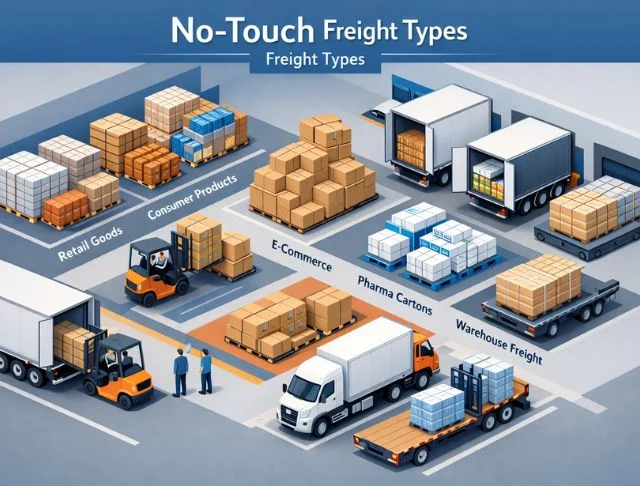
The most common types of no-touch freight are dry van and refrigerated (reefer) freight. Dry van trailers carry packaged products, retail merchandise, and household goods easily handled by warehouse equipment and staff. Refrigerated freight, commonly known as reefer, transports temperature-controlled perishables like food and beverages under the same no-touch model. In both cases, warehouse crews on both ends handle all loading and unloading, keeping drivers completely hands-off throughout the entire process.
No-Touch Freight vs. Touch Freight: What Is the Difference?
The difference between no-touch freight and touch freight lies in their cargo handling responsibilities, physical demands, dock time, detention risk, driver fatigue levels, Hours of Service impact, and cargo damage liability assigned to the driver.
| Factor | No Touch Freight | Driver Assist Freight | Touch Freight |
| Driver Cargo Handling | None | Limited | Full |
| Who Loads Freight | Warehouse Staff | Warehouse Staff | Driver |
| Who Unloads Freight | Consignee Crew | Consignee Crew | Driver |
| Physical Effort Required | None | Minimal | High |
| Time Spent at Dock | Low | Moderate | High |
| Detention Risk | Low | Moderate | High |
| Driver Fatigue Level | Low | Moderate | High |
| Hours of Service Impact | Minimal | Moderate | Significant |
| Cargo Damage Liability | Low | Moderate | Higher |
| Preferred By | Most Drivers | Some Drivers | Experienced handlers |
Benefits of No-Touch Freight for Drivers and Trucking Companies
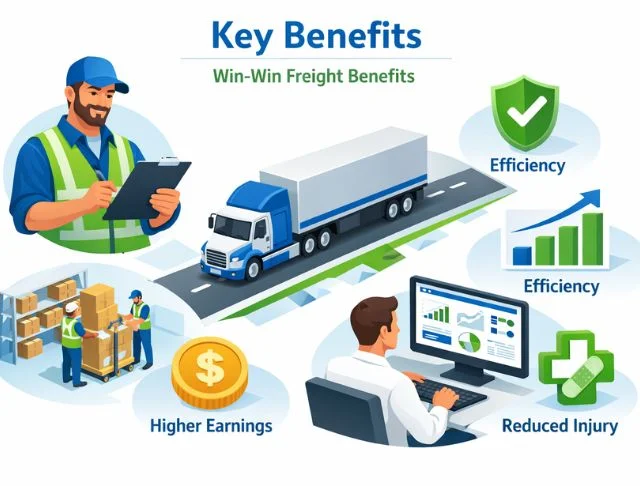
The benefits of no-touch freight for drivers and trucking companies are given below.
For Truck Drivers:
- Eliminates physical cargo handling and reduces lifting-related injuries
- Conserves energy and keeps drivers focused on safe driving responsibilities
- Improves turnaround times by eliminating dock wait times completely
- Creates additional rest opportunities during warehouse-managed cargo handling
- Allows drivers to maximize miles, maintain schedules, and boost overall productivity
For Trucking Companies:
- Decreases cargo damage disputes and reduces liability from improper handling
- Improves equipment utilization through efficient drop-and-hook networks
- Enables consistent freight movement with minimal delays and disruptions
- Gives shippers direct control over how products are handled before transportation
- Allows receivers to inspect and unload shipments according to their own internal procedures
No-Touch Freight Jobs and Career Opportunities
No-touch freight jobs are available across CDL-A, CDL-B, and Non-CDL levels, covering local, regional, and OTR positions with zero cargo handling responsibilities. No-touch freight offers a clear career path for drivers at every experience level, from entry-level box truck roles to high-paying OTR dry van and refrigerated routes.
The no-touch freight jobs and career opportunities are given below.
CDL (Commercial Driver’s License) No Touch Freight Jobs
CDL no-touch freight jobs are career opportunities where licensed commercial drivers transport preloaded trailers across local, regional, and OTR (Over-the-Road) routes without any cargo handling responsibilities. CDL-A (Commercial Driver’s License Class A) and CDL-B (Commercial Driver’s License Class B) drivers may qualify for different types of no-touch routes depending on the equipment and freight involved.
Local No-Touch Freight Jobs
Local no-touch freight jobs are career opportunities where drivers operate shorter routes within a 100-150-mile radius of their home terminal, enjoying daily home time, predictable schedules, and zero cargo handling responsibilities. Local carriers offer these positions to drivers who prefer consistent routines and improved work-life balance without sacrificing steady freight volume.
OTR (Over-the-Road) No Touch Freight Jobs
OTR no-touch freight jobs are career opportunities where drivers transport freight across multiple states over long distances without ever touching the cargo at pickup or delivery. OTR carriers commonly offer these positions within dry van and refrigerated divisions and are for drivers who want to maximize miles and earnings on the road.
Non-CDL (Non-Commercial Driver’s License) and Entry-Level No-Touch Jobs
Non-CDL and entry-level no-touch freight jobs are career opportunities designed for drivers who are either beginning their trucking career or operating smaller commercial vehicles like box trucks and delivery vehicles without a full commercial license.
How Much Do No-Touch Freight Drivers Make?
No-touch freight driver salaries vary based on experience, route type, location, and pay structure, with entry-level drivers earning between $50,000 and $70,000 annually, while experienced OTR drivers and top earners regularly exceed $100,000 per year with bonuses, safe-mile incentives, and overtime. Every week, most no-touch dry van drivers average between $1,300 and $1,500 per week, with top performers earning up to $1,900 per week. Trucking companies offering premium no-touch positions often sweeten the deal further with health coverage, retirement plans, and consistent schedules on top of competitive base pay.
Frequently Asked Questions About No Touch Freight
What does no-touch freight mean?
No-touch freight is a type of transportation in which the driver only transports the shipment with no requirement of loading or unloading the cargo. Warehouse staff or dockworkers handle the freight at pickup and delivery locations.
Is no-touch freight easier than touch freight?
Yes, no-touch freight is easier for drivers to manage, as drivers are only responsible for transporting the load and are not required to handle loading or unloading.
Do no-touch freight jobs pay less?
Yes, no-touch freight jobs may pay less than other trucking roles. But these jobs can pay more depending on factors such as experience, route type, mileage, and the carrier.
What trailers are used for no-touch freight?
The trailers that are used for no-touch freight are dry van and refrigerated (reefer) trailers. These trailer types are typically loaded and unloaded by warehouse staff, allowing drivers to focus solely on transportation.
Can new CDL drivers get no-touch freight jobs?
Yes, many carriers offer no-touch freight positions to new CDL drivers due to lower pay rates. These jobs are often a good starting point because they involve less physical labor and allow drivers to gain valuable driving experience.