


In recent years, the sinking rate of ships has dropped dramatically. A total of 729 large ships were lost worldwide between 2014 and 2023. Year by year, the number decreased: 105 ships were lost in 2015 and only 26 in 2023. A 2020 summary noted that 49 ships sank worldwide, including smaller vessels, compared to 66 large ships lost that year.
Over 2013–2022, about 807 total ships of all types sank globally (≈80 per year). Focusing on commercial oceangoing vessels (over 100 GT), Allianz reported an average of ~68 total losses per year for 2015–2024. The downward trend is clear: Allianz and industry sources note a roughly 75% decline in annual losses since 2014.
In the 1990s, over 200 ships were lost every year, but by the 2010s, that number had halved. This shows major revelation in safety improvements in navigation, ship design and regulation. For more details, let’s dive in.
Key Ship Sinking Statistics
- 729 large ships were lost worldwide between 2014–2023.
- Losses fell from 105 ships in 2015 to only 26 in 2023.
- On average, about 80 ships sink globally per year (2013–2022).
- The 1990s saw 200+ ships lost annually; today, it’s down by ~75%.
- Asia-Pacific is the top hotspot with 184 losses (2014–2023).
- The Eastern Mediterranean & Black Sea reported 115 losses in the same period.
- Cargo ships dominate losses: 311 general cargo and 27 container ships sank from 2013–2022.
- Fishing vessels: at least 117 losses worldwide (2013–2022).
- Passenger vessels: about 70 sinkings between 2013–2022, often with high casualties.
- Tankers & bulk carriers: ~103 losses combined (2013–2022).
- Deadliest wreck in peacetime: MV Doña Paz (1987) – 4,300+ deaths.
- Modern commercial ship accidents cause dozens of deaths per year, not thousands.
- Economic losses: ~$17B in cargo lost in 2021 alone.
- Environmental toll: Exxon Valdez spill dumped 11M gallons of oil; Deepwater Horizon released 134M gallons.
Ship Sinkings by Region
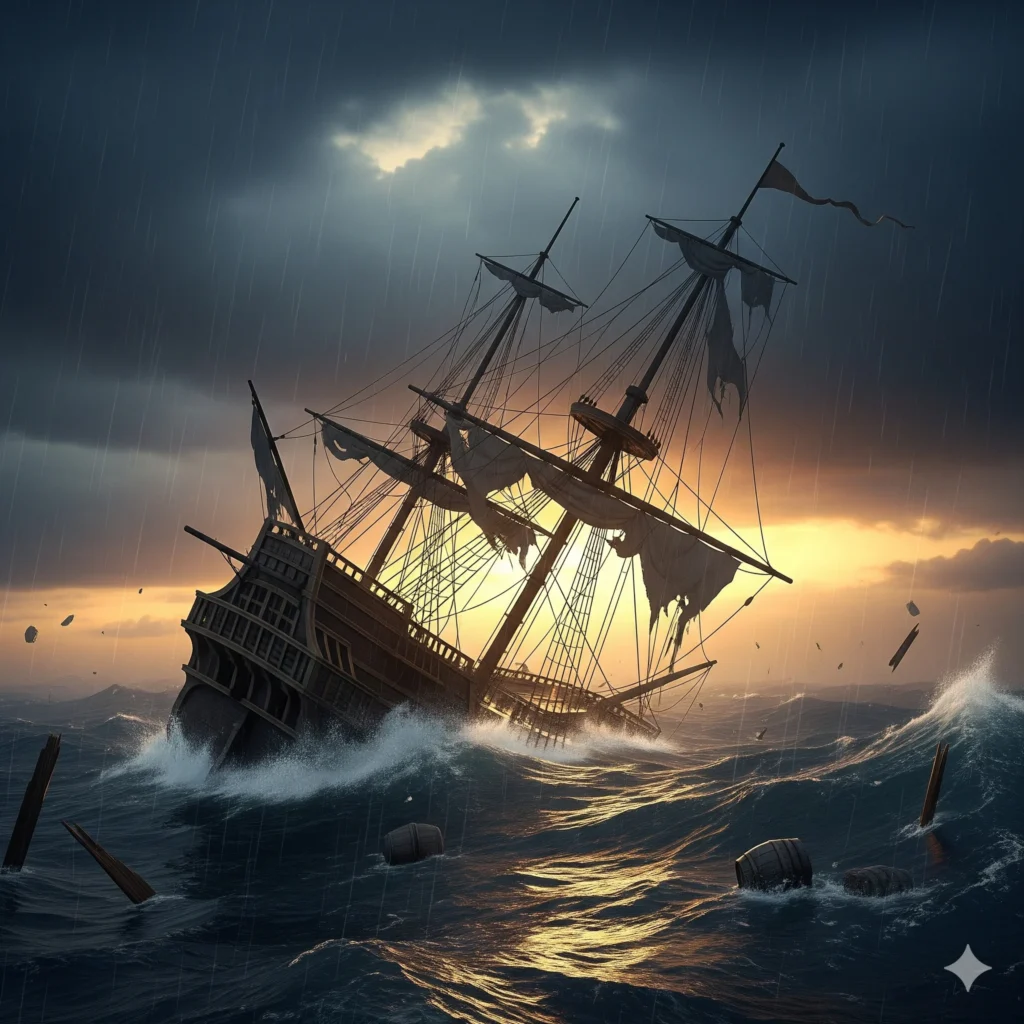
In this section, we’ll discuss the stats in detail, mainly focusing on regions. Some regions lose many ships, while others lose almost none. Asia-Pacific waterways lose the most ships, followed by Mediterranean/European sea lanes, and then the Atlantic and African regions.
Asia-Pacific Waters
The Asia-Pacific region is the world’s shipping accident hotspot. From 2014–2023, South China, Indochina, Indonesia and the Philippines alone accounted for 184 of 729 total losses globally. That region led the annual tally in 2023 (8 losses). Nearby Japan/Korea/N. China had another 62 losses (3 in 2023). These figures reflect both heavy traffic and variable safety conditions in parts of Southeast Asia.
European and Mediterranean Seas
European waters see many losses too, especially the Eastern Mediterranean and Black Sea (115 losses in 2014–2023). Western European waters (British Isles/North Sea/Bay of Biscay) saw 54 losses, and the West Mediterranean 29, in that period. These regions rank high partly due to busy ports and complex coastlines. (For example, in 2023 six losses occurred in the East Med/Black Sea, and three around the British Isles.)
North America and the Atlantic
Official tallies for North American waters are low. Over 2014–2023, only 18 losses were recorded in the “West Indies”/Caribbean region and 23 off South Atlantic/S. American coasts. The U.S. and Canadian coasts see very few total losses of large ships (since incidents there often result in salvage rather than sinking). Notable major historical wrecks (e.g. Titanic in the Atlantic) are exceptions, but modern data show North Atlantic sinkings are minimal. For context, no losses were reported in 2023 in these Atlantic categories.
Africa and Other Regions
Ship losses along African coasts are relatively rare. From 2014–2023, only 26 vessels were lost along the West African coast (none since 2020). The Arabian Gulf (Middle East) saw 38 losses in 2014–2023 (none in 2023). Other world regions (Bay of Bengal, S. Atlantic, etc.) collectively accounted for the remaining losses. Overall, Africa and the Americas account for a small fraction of global sinkings compared to Asia-Pacific and Mediterranean areas.
Ship Types Most Commonly Lost
Certain vessel types are lost more than others. The wreck count is high among cargo-carrying ships. From 2013–2022, the world lost 311 general cargo ships and 27 container ships (out of 807 total losses). In other words, cargo and container ships are lost most frequently. Let’s explore the stats more deeply.
Cargo and Container Ships
These large merchant vessels represent the bulk of losses. Combined data for 2013–2022 show about 338 cargo/container ships lost (311 cargo + 27 containers). For example, foundering (sinking in rough seas) is the top cause of such losses. Incidents of container ships losing cargo overboard also occur (e.g. the ONE Apus in 2020 lost 1,816 containers, worth ~$200M), but total ship sinkings remain relatively low.
Fishing Vessels
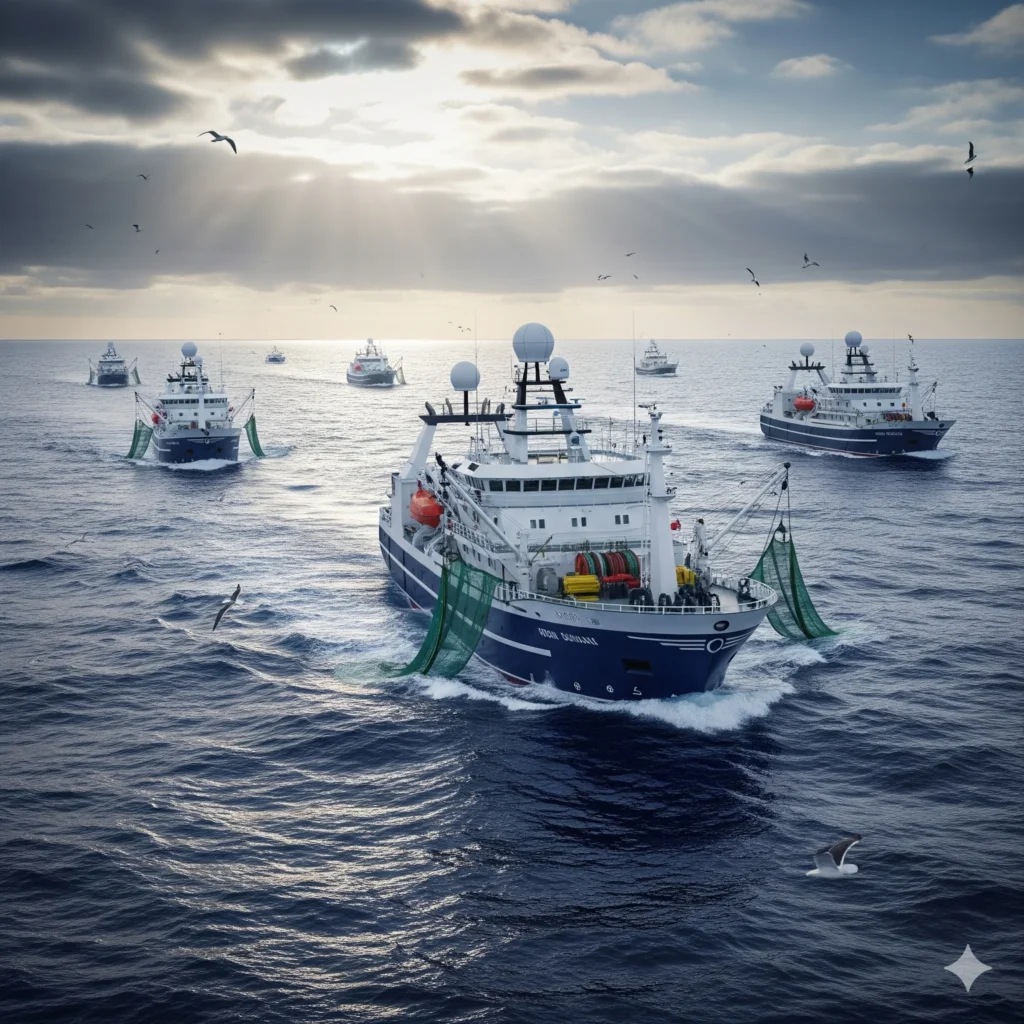
Fisheries face high loss rates, especially in developing regions. Worldwide, 117 fishing vessels sank in 2013–2022. Smaller fishing boats (often under 100 GT) are not fully captured in these numbers, so real losses could be higher. Nonetheless, fishing boats constitute roughly 15% of recorded sinking losses.
Passenger Ships and Ferries
Passenger vessels (cruise ships, ferries, etc.) accounted for around 70 sinkings in 2013–2022. Modern cruise liners rarely sink, but when they do (e.g. Costa Concordia 2012, Carnival Splendor 2010 fire, etc.), the events are highly publicized. Ferry accidents (often in Asia) sometimes cause catastrophic casualties as discussed below.
Tankers and Bulk Carriers
Bulk carriers (grain, ore carriers) saw about 53 losses (2013–2022). Crude oil tankers (the largest class) account for about 12 losses in that period, plus additional smaller oil/chemical tankers (38 in 2013–2022). Tanker sinkings are comparatively rare due to strict design standards, but when they occur they can spill massive oil quantities
Other vessel types (tugs, off-shore support, LNG carriers, etc.) make up the rest of the losses. The ship losses here excludes total loss of barges and small crafts. In short, commercial merchant ships (cargo, container, bulk, tanker) and fishing vessels dominate global shipwreck stats.
Fatalities and Survivors in Ship Sinkings
In this section, we discuss in detail the annual death toll at sea and rescue rates. Although it is very hard to get exact numbers, I have worked to provide the best possible estimates for these answers.
Annual Death Toll at Sea
Exact global tallies of fatalities in ship sinkings are hard to compile, but historically shipwrecks have claimed many lives. Most merchant ship sinkings today have few or no fatalities due to safety measures, but major accidents can be deadly.
For example, the Titanic (1912) cost about 1,500 lives; the Lusitania (1915) about 1,198.
The MV Doña Paz ferry collision (1987) is the deadliest peacetime wreck ever – an estimated 4,300+ passengers (of ~4,400 aboard) died. The WWII evacuee ship Wilhelm Gustloff (1945) was torpedoed, killing ~9,000.
These huge numbers are the exception – most modern losses involve much lower death tolls. In a recent decade, the annual global death toll from routine commercial shipping accidents is often in the low dozens (for example, EU-registered ships average ~26 deaths per year worldwide.
Rescue Rates and Survivorship
Advances in safety (lifeboats, radios, maritime SAR) mean survivorship is generally high if help is quick. In the Costa Concordia cruise disaster (2012), over 4,200 of ~4,229 passengers/crew were rescued (only 32 died).
Conversely, ferry accidents often trap passengers; MV Sewol (2014) sank with 476 aboard and 304 died (mostly schoolchildren).
The MS Estonia (1994) was a tragedy: out of 989 on board, only 137 survived (852 perished).
In general, crew and passengers lose their lives due to capsizing (foundering) or collision/grounding; in many sinkings the vast majority survive (especially if ships have enough lifeboats and swift rescue).
Economic and Environmental Costs
Ship accidents cause heavy economic damage. Understanding the stats about them can help us get an idea of the impact of these losses on the overall economy. Along with that, these accidents also cause the loss of oil and other resources.
Financial Losses from Maritime Accidents
The cargo and ship loss costs run into the tens of billions annually. A recent analysis found ocean freight losses were $17 billion in 2021 alone, and about $95 billion over 2017–2021.
(This includes the value of lost cargo, containers, ship and cleanup costs.) Insurance claims for lost cargo exceeded half a million in 2017–2021. Ship losses themselves also destroy assets – modern supertankers and container ships cost upwards of $100–200 million new, so each total loss is a major economic hit.
High-profile accidents can cause enormous one-off losses: for instance, the ONE Apus container ship’s 2020 disaster (caught fire, lost 1,186 containers) led to $200M in cargo claims.
Oil Spills and Ecological Damage
When tankers or cargo ships sink, environmental damage is often severe. A striking example is the 1989 Exxon Valdez oil spill: the tanker grounded in Alaska and spilled ~11 million gallons of crude oil into Prince William Sound, devastating marine life (hundreds of thousands of seabirds, otters, seals, etc. died).
Similarly, the 2010 Deepwater Horizon blowout (technically an oil rig) killed 11 crew and released ~134 million gallons of oil into the Gulf of Mexico – the largest U.S. marine spill on record.
Even modern tanker accidents (e.g. Sanchi in 2018) can release tens of thousands of tons of oil, fouling coasts and fisheries. Beyond oil, any sinking can leak chemicals or pollutants and harms habitats. Cleanup costs and lost productivity (fisheries, tourism) can be huge; for example, the Exxon Valdez settlement was over $1 billion. In summary, each major shipwreck or spill can cost hundreds of millions or more, besides the price of the lost vessel.
Conclusion
Here you have all the important stats related to ships sinking in one place. I have done the heavy lifting for you. I tried to find the most accurate resources and also mentioned sources where needed. Hope it works for you.
Connecting Industry Knowledge with Proven Services
We provide specialized dispatch solutions to help carriers and owner-operators run efficiently. Explore our key services below: