

by Muhammad Rahat
Aug 12, 2026

Reviewed by Ford
Truck Dispatch Specialist
An owner-operator’s job is not only about driving on the road. They must stay DOT-compliant. There is a mountain of paperwork and a checklist that never seems to end.
A single missing document or an overlooked HOS violation may cause penalties. Multiple violations can increase CSA scores. After seeing these violations, brokers don’t trust you, and insurance costs increase.
This guide breaks down the DOT compliance requirements you need to complete weekly, monthly, quarterly, and annually. It will tell you what to track and at what time. You can stay ahead of violations with this information.
- What Is Owner-Operator DOT Compliance?
- Owner-Operator DOT Compliance Requirements at a Glance
- DOT Compliance Checklist for Owner-Operators
- Essential DOT Records Every Owner-Operator Must Keep
- Common DOT Compliance Mistakes Owner-Operators Make
- DOT Compliance Penalties for Owner-Operators
- How to Prepare for a DOT Audit
- Stay DOT Compliant While You Focus on Driving with Max Dispatch
What Is Owner-Operator DOT Compliance?
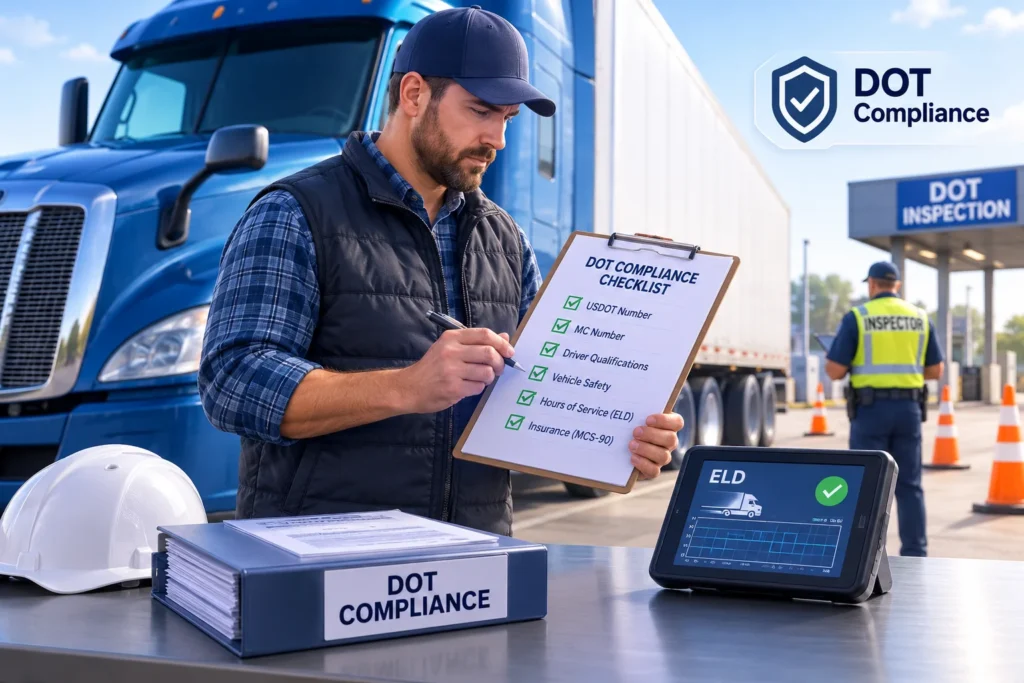
Owner-operator DOT compliance means meeting all the FMCSA requirements. These requirements include safety and legal rules. The U.S Department of Transportation and the Federal Motor Carrier Safety Administration set these rules. They apply to trucking companies, freight carriers, and owner-operators. These rules ensure safe interstate driving. These requirements apply equally to large fleets (which have a safety department) and owner-operators.
Owner-Operator DOT Compliance Requirements at a Glance
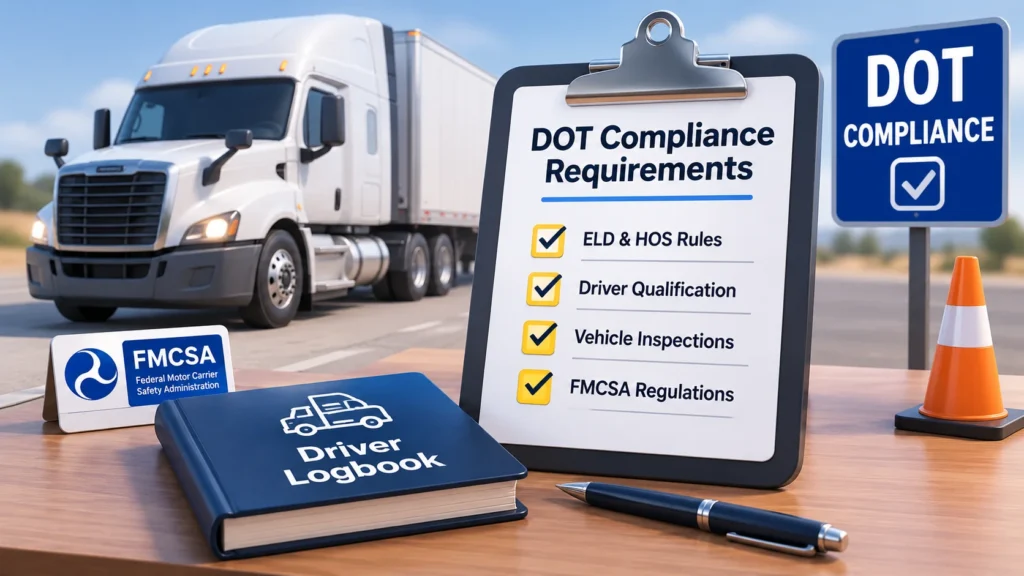
Owner-operators work in two different ways. Some are leased to a carrier; others operate under their own authority. The authority is responsible for most of the DOT compliance requirements. If you are an owner-operator who operates under your own authority, you are responsible for meeting these requirements.
- USDOT & MC Number must remain active and updated with the FMCSA
- Liability insurance and cargo insurance
- BOC-3 filing with a process agent
- UCR registration
- IFTA/IRP registrations for fuel taxes
- Driver Qualification File
- DOT Medical Card
- Drug & Alcohol Testing Program
- Hours of Service
- Vehicle Maintenance
- Roadside Readiness
DOT Compliance Checklist for Owner-Operators
The owner-operator must maintain DOT compliance to continue the business and remain legal. Some requirements must be checked daily. Some requirements are checked weekly or yearly. An owner-operator must actively monitor DOT compliance requirements to meet deadlines.
Before You Start Operating
Before starting operations, you must meet applicable DOT requirements. These requirements fall into three categories. First, you must complete the requirements to ensure your operating authority. These include:
- Active DOT and MC authority
- Valid operating authority
- Current vehicle registration
- Valid commercial auto insurance
- Current apportioned plates and credentials
- Required state and federal permits
- Updated carrier information
- Current Unified Carrier Registration (UCR)
- Up-to-date DOT compliance records
In the second category, the owner-operator is responsible for driver documentation and compliance requirements. These are:
- Valid commercial driver’s license (CDL)
- Valid medical certification
- Current driver qualification file (DQF)
- Required endorsements and restrictions
- Valid drug and alcohol testing status
- Clearinghouse compliance
- Required driver credentials
- Driver fitness and fatigue check
- Required emergency contact information
In the last category, the owner-operator must check the vehicle’s maintenance and safety requirements. After completing all these requirements, an operator can start driving. The U.S. vehicle requirements are as follows:
- Completed pre-trip inspection
- Functional brakes, tires, lights, and steering
- Proper cargo loading and securement
- Legal vehicle and axle weights
- Functional electronic logging device (ELD)
- Accurate HOS records
- Sufficient available driving hours
- Required rest and break periods
- Required emergency equipment
- Current annual vehicle inspection
- Up-to-date maintenance and inspection records
Daily DOT Compliance Checklist
Some requirements need daily checks. These include:
☐ Valid CDL and required credentials
☐ Current medical certification
☐ ELD functioning and properly logged in
☐ HOS status and available driving hours
☐ Required 30-minute break compliance
☐ Accurate duty-status and ELD records
☐ Pre-trip vehicle inspection
☐ Brakes, tires, lights, and steering check
☐ Proper cargo securement
☐ Legal vehicle and axle weights
☐ Required emergency equipment
☐ Valid registration and insurance documents
☐ Daily inspection defect reporting
☐ Post-trip inspection when required
☐ Driver fitness and fatigue check
☐ No prohibited cellphone or texting use while driving
Weekly Compliance Tasks
Owner-operator responsibilities do not end on the weekend. He has a list of weekly compliance tasks. The weekly compliance tasks are as follows:
☐ ELD records and HOS log review
☐ Unassigned driving time review
☐ HOS violation check
☐ Driver vehicle inspection report review
☐ Tire pressure and tread-depth check
☐ Brake system condition check
☐ Lights, reflectors, and electrical-system check
☐ Fluid levels and leak inspection
☐ Cargo securement equipment check
☐ Safety equipment and fire extinguisher check
☐ Registration, insurance, and permit expiration review
☐ Maintenance and repair record updates
☐ IFTA mileage and fuel-record review
☐ ELD malfunction and diagnostic-event review
Monthly Compliance Checklist
Some documents need a monthly review. Owner-operator has to manage them as well.
☐ Monthly DVIR review and filing
☐ Documented repair of reported vehicle defects
☐ Preventive maintenance schedule and mileage review
☐ Annual DOT inspection expiration check
☐ Medical certificate expiration check
☐ CDL and endorsement validity check
☐ FMCSA Clearinghouse account review
☐ ELD malfunction and diagnostic-event review
☐ Manually edited log accuracy review
☐ Supporting document and ELD record reconciliation
☐ Fuel receipt organization and filing
☐ Jurisdiction-specific mileage record update
☐ ELD and inspection record backup
☐ Accident register update, if applicable
☐ Liability and cargo insurance certificate review
☐ IRP and IFTA credential validity check
☐ State-specific permit validity check
☐ CSA/SMS score and safety-data review
☐ Roadside inspection report review
☐ DataQs dispute review, if applicable
☐ Drug and alcohol testing program status review
Quarterly Compliance Tasks
Staying DOT-compliant does not end with monthly inspections. Here is what owner-operators check every three months:
☐ File IFTA quarterly fuel tax report
☐ Reconcile quarterly mileage and fuel records by jurisdiction
☐ Review driver qualification file for upcoming expirations
☐ Pull and review updated motor vehicle record (MVR)
☐ Confirm random drug and alcohol testing pool participation
☐ Review FMCSA Clearinghouse for unresolved violations or status changes
☐ Audit CSA/SMS scores across all BASICs
☐ Review roadside inspection history and DataQs disputes
☐ Check preventive maintenance program compliance
☐ Inspect critical safety systems beyond routine maintenance
☐ Confirm active and adequate liability and cargo insurance
☐ Verify IRP registration and apportioned plate renewal timelines
☐ Review permit validity across operating jurisdictions
☐ Back up and archive quarterly compliance records
☐ Review load or lease agreement compliance clauses, if applicable
Annual DOT Compliance Checklist
Certain DOT requirements come due annually. The following annual checklist items are what every owner-operator should follow:
☐ Complete annual DOT vehicle inspection and update documentation
☐ Renew CDL, if expiring during the year
☐ Complete DOT medical examination and update medical certificate
☐ Conduct annual motor vehicle record (MVR) review
☐ Complete annual driver certification of violations
☐ Renew IRP registration and apportioned plates
☐ Renew IFTA license and decals
☐ Renew state-specific operating permits
☐ Renew liability and cargo insurance policies
☐ File UCR renewal
☐ Update emergency contact and company information
☐ Review annual drug and alcohol testing program compliance
☐ Verify FMCSA Clearinghouse registration and query records
☐ Archive annual DVIRs, ELD logs, and maintenance records
☐ Conduct full-year CSA/SMS score review
☐ Evaluate preventive maintenance program effectiveness
☐ Review lease and contract agreements, if applicable
☐ Confirm active MC and DOT numbers and good standing
Essential DOT Records Every Owner-Operator Must Keep
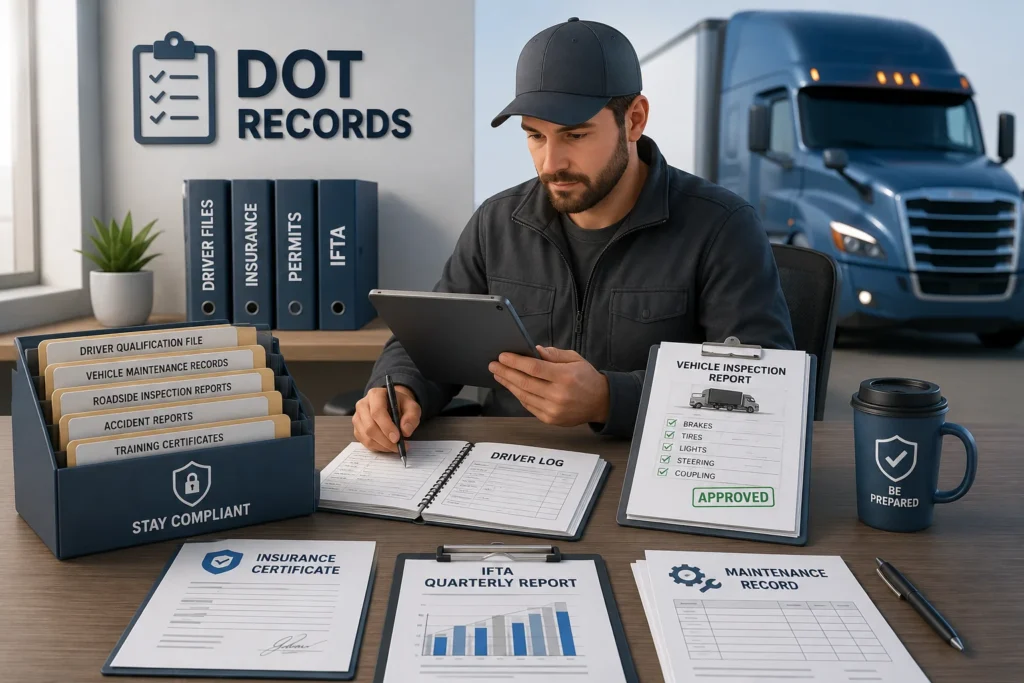
An owner-operator must maintain important DOT compliance records. They need to retain these records for varying lengths of time. Essential DOT records include driver qualification documents, vehicle maintenance records, drug and alcohol testing records, and hours-of-service records.
The required retention period for alcohol and drug testing records varies from 1 year to 5 years, depending on record type. These records should be secured separately from personal files. Driver qualification files are retained for 3 years. The driver should keep the hours-of-service records for 6 months. An owner-operator must keep vehicle maintenance records for 1 year at the location where the vehicle is garaged.
Common DOT Compliance Mistakes Owner-Operators Make
One common mistake owner-operators make is failing to maintain required driver qualification files. They don’t even know all the required files. Even if they have all the files, they may fail to identify expired documents. Drivers may forget to record their duty status, misreport break periods, or exceed their driving limit. All of these actions can lead to violations of hours-of-service rules. Some drivers miss required vehicle inspections or maintenance due to their busy schedules. Drug and alcohol testing records are critical and sensitive. Drivers may fail to enroll in the random testing pool or fail to report results to FMCSA.
DOT Compliance Penalties for Owner-Operators
DOT compliance penalties are financial enforcement actions. These penalties apply to those who violate federal safety regulations. FMCSA, which operates under the Department of Transportation, implements them.
Penalties are more costly, increasingly data-driven, and more frequent in 2026. The severity of penalties depends upon the type of violation and its repetition. Violations of hours-of-service can result in penalties ranging from $1,000 to $6,000. These are the most expensive because they can contribute to fatigue-related accidents. Vehicle inspection and driver qualification issues also result in significant financial penalties.
Violations can also affect CSA scores. Insurers, brokers, and enforcement agencies review these scores. This can cause loss of opportunities. Common DOT compliance mistakes can also cause these violations. An automated compliance system helps to avoid these violations. This system tracks expirations, logs inspections, monitors HOS, and centralizes documentation.
How to Prepare for a DOT Audit
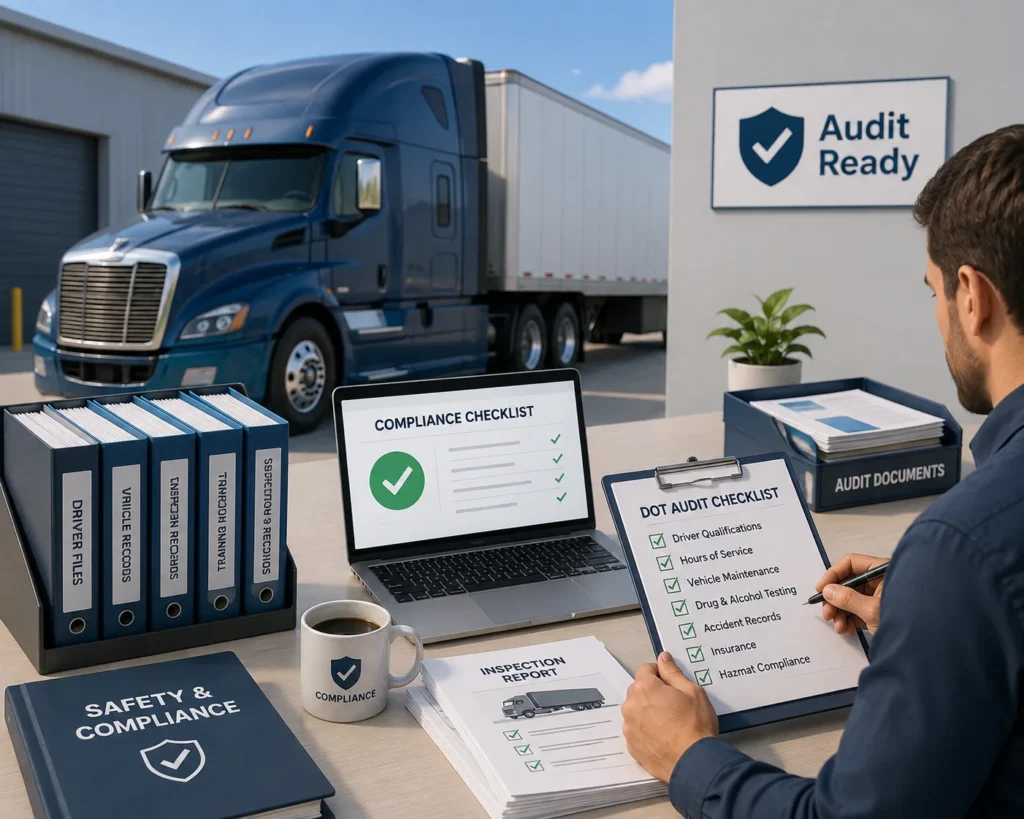
A DOT audit is an official examination of an owner-operator’s records and safety practices. FMCSA may initiate an audit for several reasons. It can be a random review, a new entrant review, or a review triggered by repeated violations.
Owner-operators should be prepared for a DOT audit. They should organize all necessary documents and records. A backup should be stored online. One way to prepare is to conduct mock audits. An automated system is also a valuable option for managing compliance records. Owner-operators should be trained in FMCSA regulations. They should stay updated on regulatory changes.
Stay DOT Compliant While You Focus on Driving with Max Dispatch
Owner-operators drive 10-14 hours per day. Their hectic routine makes it difficult to complete compliance tasks on a weekly, monthly, quarterly, and annual basis. Max Dispatch handles that burden for you. Our team tracks your credentials, monitors expiration dates, and flags issues before those issues turn into violations. We check driver qualification files, HOS logs, and vehicle maintenance dates. Max Dispatch experts help keep you prepared for audits. They manage your compliance while you drive, earn, and grow your business.