

by Faizan Hassan
Feb 5, 2026

Reviewed by Ford
Truck Dispatch Specialist
As an owner-operator or motor carrier, being organized and compliant is essential to facilitate smooth operations. A carrier packet is a key part for carriers, as it serves as an important set of documents that the dispatcher requires to offer you freight.
In this guide, we will walk you through the explanation of the carrier packet, why it is required, and how it makes dispatcher onboarding and daily operations easy.
A pre-made carrier packet can reduce administrative tasks, respond to the dispatcher quickly, and focus on managing loads instead of the documents.
What Is a Carrier Packet?
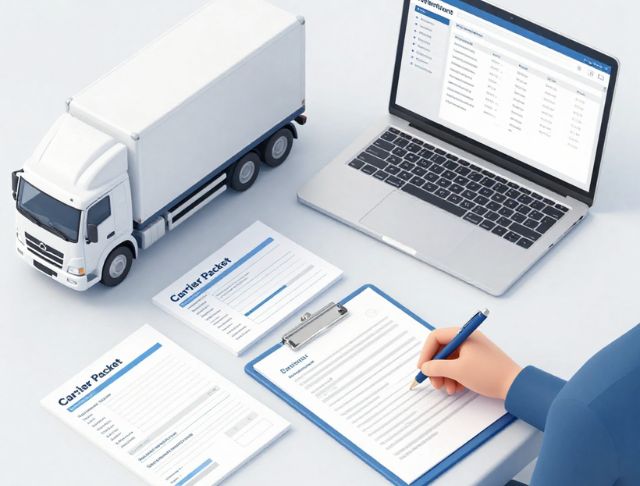
A carrier packet is a set of documents that dispatchers usually use to confirm the motor carrier’s authority to operate on the road legally. It typically includes insurance details, like a W-9, MC information, and other essential details required by brokers.
This packet serves as a significant introduction and verification of the carrier’s legal compliance and capability to handle freight. A packet maintains documents related to inspection records and improves your reliability in the industry.
What Is Included in a Carrier Packet?

It’s essential to understand the key documents a carrier packet contains. These documents provide the information brokers or dispatchers require for verification, approval, and working with a carrier.
Motor Carrier Authority (MC Number)
The MC number is included in the carrier packet for verification of the carrier’s authority and legal status. It allows brokers to confirm that the carrier is authorized to haul freight and is operating under federal regulations.
Providing an MC number helps brokers and dispatchers check compliance, insurance status, and safety ratings before offering a load. Without this verification, you cannot assign freight legally and confidently.
The carrier packet serves as a reference for trust and approval, ensuring the carrier can be dispatched without delays.
USDOT Certificate
The USDOT certificate is included in a carrier packet that brokers and dispatchers can use to verify the carrier’s registration, safety ratings, and operating status. It allows them to quickly assess the carrier’s compliance with federal regulations.
The USDOT certificate helps build trust and reliability, showing that the carrier is eligible and registered to operate. Dispatchers rely on this document to reduce risks, avoid violations, and ensure that they are working with a compliant and reliable carrier.
W-9 Form
A W-9 form is an Internal Revenue Service tax form that verifies the name, address, and taxpayer identification number for employment or other income sources.
Brokers rely on the W-9 form to ensure payments are issued to the correct legal entity and that year-end tax forms (such as 1099s) are accurate.
A complete W-9 form in the carrier packet helps prevent payment errors and processing delays. The W-9 form allows carriers to receive payments smoothly and on time.
Key Takeaways:
- The information taken from a W-9 form is often used to generate a tax form required for income tax filing.
- The information collected by an entity on a W-9 form cannot be revealed for any other purpose under strict privacy regulations.
- The information obtained from a W-9 form is most often used to create Form 1099. A 1099 form carries information about income received by the TIN holder that is not listed on a W-9.
- Independent contractors who work with companies they do not work for as employees must often provide those companies with a W-9.
Certificate of Insurance (COI)
A certificate of insurance (COI) is included in the carrier packet so the dispatcher can verify the carrier’s activity and insurance coverage before allocating a load. It allows dispatchers to verify the policy and its expiration dates.
Brokers rely on the COI to ensure they are not liable for cargo damage or accidents caused by an uninsured carrier, and they will not release freight or approve the carrier.
The COI is a risk protection document that helps carriers gain approval and maintain access to consistent freight opportunities.
Carrier Agreement
A carrier agreement is a legal contract between a customer and a carrier that outlines the terms and conditions under which the carrier provides specific services to that customer.
Carrier agreements govern the rights and obligations of both parties as the carrier provides services such as package pick-up, transport to a facility, and delivery of goods to the customer.
Operating Authority Letter
An operating authority letter, also known as a certificate of operating authority, includes the company’s address, name, MC number, and USDOT number.
An operating authority letter is issued by FMCSA and kept in the legal file. This letter is essential for booking loads, and it’s one of the last steps when a new carrier is approved.
Driver Information and Contact Details
This section ensures clear communication, trust, and accountability. Driver information and contact details are an essential part of a carrier packet because they allow brokers to identify who is actually driving on the road.
Typically, a broker requires the driver’s name, address, and phone number. This step confirms the identification of the driver assigned to the load and helps prevent unlawful acts on the road and load theft.
Many brokers also require the CDL number of the driver and the state of issuance to verify the driver’s license and eligibility.
Equipment Information (Truck & Trailer Details)
Compliance information includes details about your equipment, as well as the availability of the truck and trailer types you have. It combines the special equipment and capabilities your company offers.
It includes the company’s safety documentation, such as its safety rating, CSA total, and other related compliance information.
Void Check or ACH Payment Form
A voided check or ACH payment form is included in a carrier packet to verify the carrier’s bank account details and ensure payments are transferred into the correct account.
An ACH payment form is a legal agreement that allows electronic funds transfer between businesses and customers, ensuring secure transactions. The ACH payment form ensures carriers can receive payments without delays once loads are completed.
Dispatchers use the ACH payment form to prevent payment errors, fraud, and delays when setting up carrier payments. It allows dispatchers to send freight payments directly to the carrier’s bank account in a secure and documented way.
Safety Rating and Compliance Documents
A safety rating is an expression of the safety culture, operational discipline, and how seriously carriers take federal standards. A trucking safety rating is the official safety score the FMCSA gives a carrier.
The primary compliance documents needed for the carrier packet include:
Certificate of Insurance: This document provides the proof of insurance for the carrier, including policy limits and expiration.
Operating Authority Letter: This letter or certificate is issued by FMCSA and shows the motor carrier’s number and USDOT number.
W-9 Form: This is the tax form that is used to confirm the legal identity of the carrier owner and the taxpayer identification number (TIN).
Safety Rating Documentation: This is the required document showing the carrier’s safety rating from the FMCSA.
Driver’s License: A copy of a commercial driver’s license confirms the qualifications for driving a motor carrier.
Why Do Carriers Need a Carrier Packet?
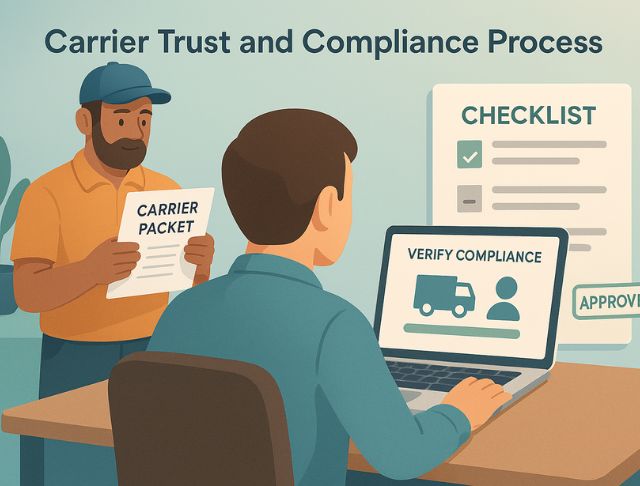
A carrier packet is essential for carriers and owner-operators because it serves as an official onboarding document. It allows carriers to work with dispatchers. Without a carrier packet, most dispatchers will not tender loads or release payments.
Major reasons that explain the importance of a carrier packet include:
Approved by dispatchers: Dispatchers use carrier packets to verify that a carrier is lawful, compliant, and insured. A complete packet helps the carrier get approved faster and be added to a broker’s trusted carrier list.
Compliance and Legitimacy: Carrier packets ensure that carriers meet legal requirements, minimize the risk of working with non-compliant carriers, and improve the carriers’ reputation in the industry.
Reliable Network: Carrier packets help carriers build and maintain a reliable network with dispatchers. After reviewing the legal credentials and performance of the carrier, dispatchers can ensure they work with carriers who meet their standards of service and reliability.
Efficient Onboarding: Packets streamline the onboarding process by regulating the information collection. Dispatchers can collect the essential information and estimate the carrier’s suitability without excessive communication.
How to Create a Carrier Packet

Collect all the documents that are listed above, ensure they are active, and accurately represent your motor carrier operations.
Separate and assemble them in a way that makes them easy to handle. For a polished version of your packet, scan the documents and use a beginner’s design platform like Canva or Microsoft Word.
Make a simple and professional layout, save the carrier packet as a PDF, and send it to the broker via their preferred method, such as email or an onboarding platform.
Max Dispatch Services and Carrier Packet
At Max Dispatch, the carrier packet plays the role of a formal agreement between the carrier and the dispatcher before any work begins. This packet clearly defines the authority to operate as a carrier owner in the industry.
Max Dispatch streamlines its dispatch services and ensures transparency between the parties. It confirms that Max Dispatch does not operate as a broker or a carrier, but acts on behalf of the carrier to find and handle freight.
This agreement helps to prevent double brokering, misrepresentation, and compliance issues. The packet ensures transparent communication, defined responsibilities, and ownership, allowing Max Dispatch to begin dispatch legally.