

by Muhammad Zubair
April 27, 2026

Reviewed by Ford
Truck Dispatch Specialist
Freight rate negotiation is one of the biggest challenges owner-operators face when working with brokers. Many truck drivers accept loads that look profitable at first but later realize that fuel costs, empty miles, weak lanes, or missing accessory pay quietly reduce their earnings. This situation becomes even more frustrating when market rates change quickly, and brokers already have better pricing information than you do.
However, you can improve your negotiation results by understanding how rates are structured, tracking cost per mile, using market tools, choosing stronger lanes, and timing your counteroffers strategically. With the right approach, you gain more control over load selection, protect your margins, and position yourself for consistent access to higher-paying freight.
Here are some strategies owner operators can use for freight rate negotiations with brokers.
Understand Broker Rate Calculations Before Accepting Loads

Owner operators must understand how rate calculations work before committing to any load, because this directly impacts profitability and negotiation strength. Every load offered by a broker includes multiple hidden variables, such as base rate, fuel surcharge, accessorial charges, and lane-specific pricing behavior that affect the final payout. When owner operators ignore these components, they often accept loads that look profitable on the surface but actually reduce overall margin after expenses are deducted.
You should analyze how the broker structured the rate confirmation and compare it with current market conditions using tools like load boards or TMS-integrated pricing data. Strong carriers evaluate whether the rate aligns with real-time demand, equipment type, and lane difficulty. This allows you to negotiate from a position of clarity instead of assumption. When you understand the full rate breakdown, you avoid revenue leakage and make smarter, data-backed decisions that improve long-term earnings per load.
Calculate Cost Per Mile to Protect Profit
Cost per mile calculation is one of the most important financial controls for truck drivers, owner-operators, and freight brokers managing carrier networks. You need to calculate your full operational cost per mile, including fuel, maintenance, insurance, tolls, and driver expenses, to understand your true break-even point.
Once you know your cost per mile, you can evaluate whether a broker’s offer actually generates profit or just covers expenses. Freight brokers also use this metric internally to evaluate carrier competitiveness and optimize pricing strategies across lanes. Owner operators protect their margins, avoid underpriced loads, and maintain financial stability even during low market cycles by consistently tracking cost per mile.
Use Spot Market Rates and Load Ratios to Increase Earnings
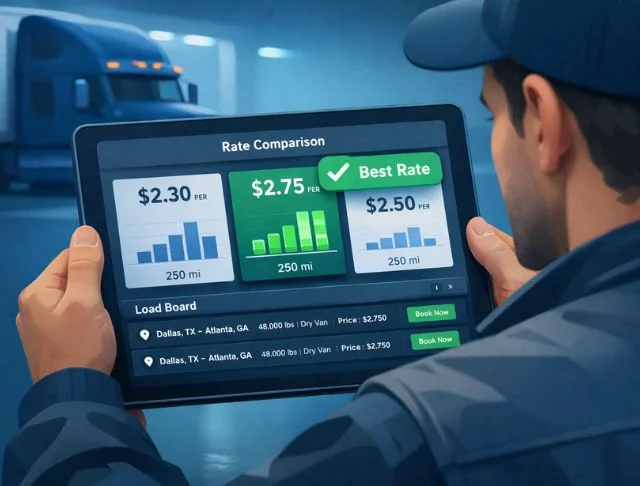
Carriers can improve earnings by monitoring spot market rates and load-to-truck ratios before negotiating any shipment. Spot market data reflects real-time demand, showing whether carriers have stronger or weaker pricing power in a specific lane. When load demand increases and available trucks decrease, carriers gain leverage to negotiate higher rates.
At the same time, the load-to-truck ratio helps identify market pressure conditions that influence negotiation strength. A high ratio signals tighter capacity, which allows carriers and brokerage operators to push for better pricing, while a low ratio usually requires more competitive bidding.
Choose More Profitable Lanes Before Negotiating Rates
Lane selection plays a critical role in freight brokerage success for dispatchers, carriers, and owner-operators who are managing multiple route options, as not all lanes offer the same profitability, even if the distance or load size appears similar. Factors such as deadhead miles, toll exposure, seasonal demand, and historical rate trends directly influence how much profit a lane can generate.
You should evaluate which lanes consistently deliver stronger margins using historical performance data or load board insights. Experienced carriers prioritize high-value lanes where brokers are more flexible due to demand pressure, rather than accepting low-yield routes that reduce overall efficiency.
Negotiate Fuel Surcharges and Extra Pay the Right Way
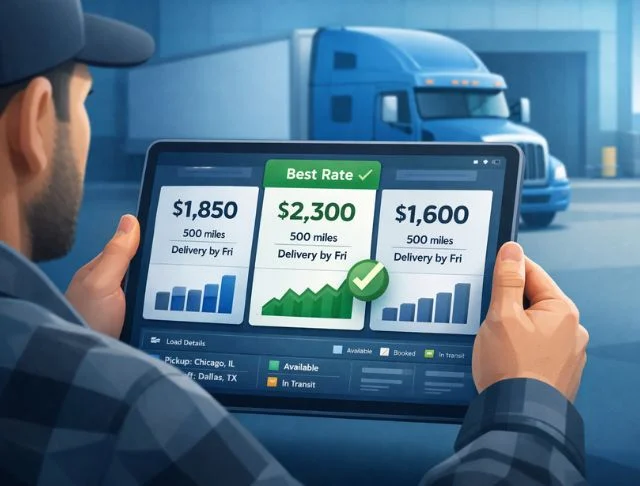
Motor carriers should treat fuel surcharges and accessorials as separate negotiation elements instead of fixed add-ons. You need to clearly review how fuel surcharge adjustments are calculated based on lane distance, current fuel index, and carrier operating costs. Many brokerage operators include standard formulas, but they often do not fully reflect real-time fuel volatility.
You should also proactively negotiate extra pay, such as detention, layover, lumper fees, and waiting time before dispatch. If you ignore these details at the rate confirmation stage, your final margin can drop significantly even on a “high-paying” load. When freight brokers and carriers align on transparent surcharge rules, both sides avoid disputes and protect long-term profitability within the Transportation Management System (TMS) workflow.
Use On-Time Performance to Get Better Rates
Maintain strong on-time performance to improve how brokers evaluate your reliability as an owner-operator and to strengthen your position during rate negotiations. When you consistently arrive on time for pickups and complete deliveries as scheduled, brokers see you as a low-risk carrier and become more willing to offer you higher-paying loads.
Freight brokers track performance indicators such as delivery accuracy, delay frequency, and how quickly you communicate updates during a shipment. When you maintain a strong record in these areas, your negotiation position improves over time because brokers prefer working with dependable owner-operators. A consistent on-time history often helps you get priority access to better lanes and stronger rates, especially when capacity is tight and reliability matters more than small price differences.
Build Strong Broker Relationships for Repeat High-Paying Loads
Build strong relationships with freight brokers by maintaining consistent communication, submitting accurate paperwork on time, and delivering loads reliably as an owner-operator. When you stay responsive during pickup, transit, and delivery stages, brokers begin to trust your availability and execution, which helps you become a preferred carrier in their network.
Freight brokers often reward dependable owner-operators with repeat loads, stronger lane opportunities, and early access to higher-paying freight before it reaches the open load board. Over time, this relationship becomes more valuable than negotiating a single higher rate because brokers prefer working with carriers who reduce delays, paperwork issues, and service risks.
Use Rate Comparison Tools Before Accepting a Load
Compare freight rates using market benchmarking tools before accepting any load as an owner-operator to protect your profit margin and strengthen your negotiation position. Platforms like DAT load board, Truckstop rate tools, and Transportation Management System (TMS) analytics help you check whether the broker’s offer matches current spot market conditions for your equipment type and lane before you commit.
You should review lane-specific rate averages, load-to-truck ratios, seasonal demand patterns, and recent shipment activity inside these tools to understand how strong your negotiation leverage really is. For example, a high load-to-truck ratio usually means fewer trucks are available in that lane, which gives you more flexibility to request a better rate.
Rate comparison tools also help you identify weak lanes, hidden deadhead risks, and temporary pricing spikes caused by regional shortages or peak shipping periods. When you use these insights before accepting a shipment, you avoid underpriced freight and choose loads that support consistent and predictable long-term earnings as an owner-operator.
Protect Yourself With Proper Rate Confirmations and Agreements
Review rate confirmations and carrier agreements carefully before accepting any shipment to protect yourself from payment disputes and unexpected deductions as an owner-operator. A written rate confirmation clearly defines agreed mileage pay, fuel surcharge structure, accessorial charges, and delivery expectations, which helps prevent misunderstandings later in the freight cycle.
You should also understand the role of the master carrier agreement because it outlines broader terms related to liability, detention policies, payment timelines, and compliance responsibilities. When you verify these documents before dispatch, you reduce operational risk and strengthen your professional credibility with brokers. Clear documentation protects your revenue and builds trust across repeated shipments.
Time Negotiations Based on Market Conditions
Time your rate negotiations according to freight market demand conditions to improve your chances of securing higher-paying loads as an owner-operator. Freight pricing changes based on seasonal demand cycles, lane congestion levels, and load-to-truck ratios, so negotiation timing directly affects your earning potential.
You should monitor market signals such as peak shipping seasons, regional freight shortages, and capacity tightening across major lanes before responding to broker offers. When demand increases and truck availability drops, your leverage improves naturally and brokers become more flexible with pricing. Using market timing as part of your negotiation strategy helps you secure stronger rates and maintain consistent profitability across different freight cycles.
Reduce Empty Miles to Improve Negotiation Power

Reduce empty miles, also called deadhead miles, to strengthen your negotiation position and increase profitability as an owner-operator. When you minimize the distance you travel without a paying load, you lower your operating cost per mile and gain more flexibility when responding to broker rate offers.
You should evaluate repositioning distance before accepting a shipment and prioritize lanes that offer stronger reload opportunities after delivery. Brokers often consider deadhead exposure when discussing rates, especially if your truck already sits close to the pickup location. When your positioning reduces their coverage risk, you gain more leverage to request better compensation.
Tracking lane history and planning backhaul opportunities also helps you avoid weak routes that create long unpaid return trips. By managing empty miles strategically, you protect your margins and improve your ability to negotiate confidently across different freight markets.
Set a Minimum Rate and Walk Away From Bad Loads
Set a clear minimum acceptable rate before negotiating with brokers so you protect your profit margin. Your minimum rate should be based on your cost per mile, fuel expenses, toll exposure, maintenance costs, and expected deadhead distance rather than the broker’s first offer.
You should treat this minimum rate as a decision threshold that guides whether you accept, counteroffer, or decline a shipment. Brokers expect negotiation participation from experienced carriers, and they often respect owner-operators who understand their numbers and communicate firm rate expectations.
Walking away from underpriced loads also strengthens your long-term earning potential because it prevents you from filling your schedule with low-margin freight. Over time, brokers recognize carriers who operate with clear pricing discipline and are more likely to offer stronger rates on future opportunities.
Improve Load Selection Strategy for Higher Profits
Improve your load selection strategy by reviewing lane demand, reload availability, deadhead distance, and broker reliability before accepting freight. A load that looks strong based only on rate per mile can still reduce your profit if it places your truck in a weak reload area or increases unpaid repositioning miles after delivery.
You can compare multiple load options using rate comparison tools and recent spot market trends to understand where your truck has stronger earning potential. Pay attention to seasonal demand shifts as well, because some regions offer better pricing during certain periods of the year. You create more consistent income and improve your leverage during rate discussions with brokers when you choose loads based on positioning and market signals instead of urgency.
Evaluate Lane Profitability Before Accepting Freight
Evaluate lane profitability by reviewing total trip revenue, fuel costs, toll exposure, and expected empty miles before accepting any shipment. Even when two loads show similar mileage, one lane may generate better profit because it offers stronger reload opportunities or lower operating expenses along the route.
You must check recent lane pricing trends using load boards to understand how brokers are currently paying in that corridor. It helps to confirm whether detention time, unloading delays, or lumper handling could affect your total earnings for the trip. Owner operators reduce uncertainty and maintain more stable earnings across multiple runs when they focus on lanes with steady demand and predictable reload options.
Strengthen Counteroffer Position With Market Awareness
Strengthen your counteroffer position by reviewing current spot market trends, lane demand levels, and truck availability before responding to broker rate offers as an owner-operator. These signals help you understand whether the market supports requesting a higher rate or accepting the current offer.
Owner operators should also calculate your minimum acceptable rate based on fuel costs, toll routes, and repositioning distance before making a counteroffer. Brokers take negotiations more seriously when your request reflects real lane conditions instead of guesswork. They improve their chances of securing better rates and building stronger working relationships with brokers over time when they support their counteroffer with market awareness and clear cost planning.
Conclusion
Freight rate negotiation becomes more profitable when owner-operators consistently apply rate awareness, cost control, lane evaluation, and market timing instead of relying on guesswork. When you understand broker rate structures, use proper confirmations, track cost per mile, and make decisions based on real market data, you reduce risk and improve long-term earnings. Strong communication, on-time performance, and smart counteroffers also turn one-time loads into repeat, higher-paying opportunities.
To make this process easier in real-world operations, Max Dispatch supports owner-operators by handling load sourcing, negotiation support, paperwork coordination, and broker communication in a structured way. It helps you stay focused on driving while ensuring your loads are selected and managed with better rate awareness and market alignment. If you want more consistent freight, fewer administrative delays, and stronger earning potential per mile, Max Dispatch can act as your operational support system in a competitive freight market.