

by Faizan Hassan
April 30, 2026

Reviewed by Ford
Truck Dispatch Specialist
Owner operators, truck drivers, and logistics operators often struggle with slow payments, missing documents, and constant disputes caused by poor paperwork handling. Even a small error in a rate confirmation, POD, or invoice can delay cash flow and damage broker–carrier trust. As shipment volumes increase, manual documentation and unstructured processes create confusion, operational delays, and compliance risks that directly impact profitability.
This ongoing friction makes freight management inefficient and stressful for both owner operators and truck drivers. The solution lies in adopting a structured, digital-first paperwork system supported by TMS platforms, mobile tools, and standardized workflows that ensure accuracy, speed, and complete visibility across every load.
Here are 12 smart tips that you can follow to handle freight broker paperwork easily.
- Tip 1# Review the Rate Confirmation Carefully
- Tip 2# Keep All Documents Organized Digitally
- Tip 3# Double-Check All Information Before Submission
- Tip 4# Submit Paperwork Immediately After Delivery
- Tip 5# Always Get a Clear Proof of Delivery (POD)
- Tip 6# Understand Broker Payment Terms
- Tip 7# Maintain a Standard Document Checklist
- Tip 8# Communicate Clearly with Brokers
- Tip 9# Use Apps to Scan and Send Documents
- Tip 10# Avoid Common Paperwork Mistakes
- Tip 11# Keep Records for Compliance and Disputes
- Tip 12# Create a Repeatable Paperwork System
- Quick Paperwork Checklist for Every Load
- Final Thoughts# Handle Paperwork Like a Professional Carrier
Tip 1# Review the Rate Confirmation Carefully
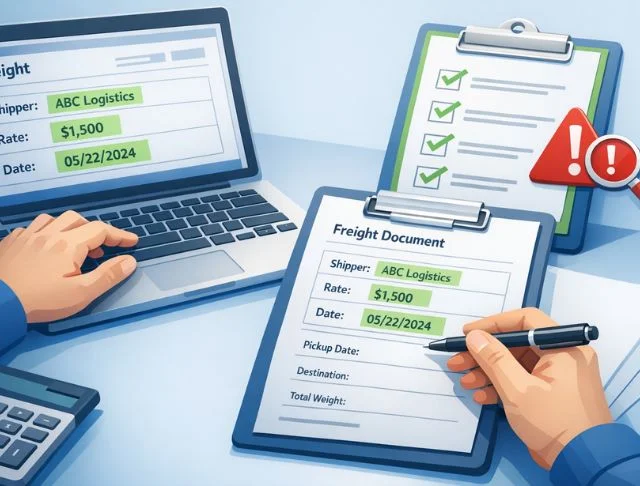
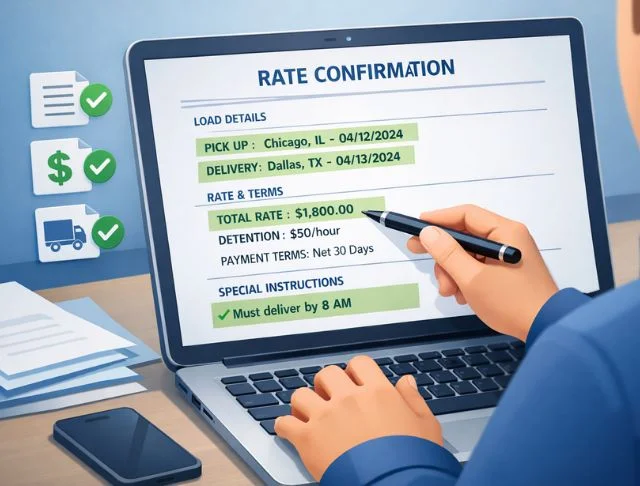
Review the rate confirmation in detail before accepting or releasing a load. This document defines the payment structure, responsibilities, pickup and delivery details, and any special instructions tied to the shipment. In many cases, revenue leakage does not come from market rates but from overlooked clauses inside rate confirmations.
Owner operators and truck drivers should verify that the agreed rate per mile matches what was negotiated during booking with the freight broker. You also need to closely evaluate detention terms, layover charges, and fuel surcharge rules because these directly impact your earnings and satisfaction. Even small mismatches in these fields can disrupt both profitability and broker trust.
Owner operators must also validate pickup and delivery appointments against their availability. If timing appears unrealistic, it should be clarified immediately with the broker or dispatch coordination to avoid downstream detention costs or service failures. Additionally, confirm load weight, commodity classification, and handling requirements such as refrigeration needs or hazardous material compliance before finalizing dispatch.
Experienced owner operators and truck drivers treat the rate confirmation as a binding operational contract within their Transportation Management System (TMS), not just a booking form. The validation of these details before dispatch reduces disputes, protects earnings, and strengthens long-term broker relationships within their freight network.
Tip 2# Keep All Documents Organized Digitally
Store all shipment documentation in a structured digital system instead of relying on physical paperwork or scattered files across devices. A Transportation Management System (TMS) acts as the central hub where owner operators, truck drivers, and logistics teams manage every shipment record in one unified place.
Owner operators and truck drivers should create clear digital categories for active loads, pending payments, and completed deliveries within their workflow. This data storage structure allows them to retrieve documents quickly during audits, broker disputes, or invoice verification processes. When operations scale, this level of organization directly reduces operational friction and prevents revenue delays.
Owner operators and truck drivers should attach every shipment-related document directly to its corresponding load record inside the TMS. This includes rate confirmations, Bills of Lading (BOLs), Proof of Delivery (PODs), and invoices. When they maintain this load-level documentation structure, they eliminate missing files, reduce billing errors, and improve visibility across the entire shipment lifecycle.
Cloud-based freight document systems further strengthen this process by allowing owner operators and truck drivers to access shipment records from anywhere. Whether managing loads on the road or remotely, cloud access ensures uninterrupted operations and real-time document availability across the freight network.
Tip 3# Double-Check All Information Before Submission

Verify every detail in shipment paperwork before submitting it into the Transportation Management System (TMS) or sending it to shippers and freight brokers. Even minor documentation errors can delay payments, disrupt invoicing cycles, or create compliance issues between owner operators and brokers.
Owner operators and truck drivers should start by validating shipment identifiers, pickup and delivery addresses, and consignee information against the original rate confirmation. Then confirm that load weight, mileage, and commodity descriptions match the actual freight handled. These details directly affect billing accuracy and profit calculation per load.
Owner operators and truck drivers should also carefully inspect signatures, timestamps, and handwritten notes on key documents such as the Bill of Lading (BOL). If any section appears incomplete or inconsistent, it should be corrected before submission to avoid disputes during audit or payment processing.
When owner operators and truck drivers consistently apply this verification step, they reduce invoice rejections and speed up payment cycles. Clean, accurate documentation also strengthens trust between carriers and broker partners because brokers receive properly processed paperwork without delays or corrections.
At an operational level, accuracy at this stage improves cash flow stability, protects earnings, and reinforces a professional reputation across the freight ecosystem.
Tip 4# Submit Paperwork Immediately After Delivery
Submit all delivery paperwork immediately after completing a load. Waiting until the end of the day or batching documents later in the week slows down the entire workflow and directly delays payment cycles.
Owner operators and truck drivers should collect the signed Proof of Delivery (POD), Bill of Lading (BOL), and any additional shipment documentation from the consignee. These documents should be scanned using a mobile document app and uploaded directly into the Transportation Management System (TMS) or sent to the freight broker without delay.
In modern freight operations, many systems are integrated with automated workflows where POD submission triggers invoice generation automatically. This means that when owner operators or truck drivers submit documents early, the billing process starts instantly, reducing dependency on manual processing by accounting teams.
Owner-operators and truck drivers who delay paperwork submission often experience slower payment cycles and increased follow-ups from brokers. On the other hand, immediate submission creates a smoother cash flow cycle, reduces administrative friction, and improves trust between carriers and freight broker partners.
Tip 5# Always Get a Clear Proof of Delivery (POD)
Secure a clear and properly signed Proof of Delivery (POD) after every completed shipment. This document confirms that the owner operator or truck driver has successfully delivered the load to the consignee in acceptable condition, making it a critical checkpoint in the freight workflow.
Owner operators, truck drivers, and dispatch coordinators should always verify that the receiver has signed and dated the POD correctly. All shipment details must be clearly visible, including any load condition notes or exceptions. If damage, delay, or discrepancy occurs during transit, owner operators and truck drivers should document it immediately using photos or written remarks to maintain transparency across the shipment record.
A clean and accurate POD plays a direct role in accelerating payment cycles. Without it, freight brokers or shippers may delay invoice approval or raise disputes that interrupt cash flow for owner operators and truck drivers.
Owner operators and truck drivers should also store PODs digitally inside the Transportation Management System (TMS) and link them directly to the corresponding load record. This structured approach helps dispatch teams, accounting staff, and logistics managers quickly retrieve documentation during audits, claims, or payment verification processes.
Tip 6# Understand Broker Payment Terms
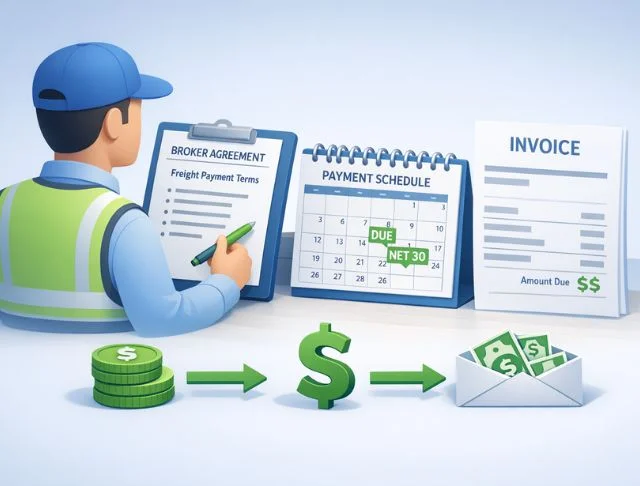
Understand payment terms before accepting any load assignment, as payment structures vary across the freight ecosystem, ranging from quick pay options to standard net 30, net 45, or even net 60 cycles.
Owner operators and truck drivers should check whether the freight broker offers factoring integration or fast pay programs. Many modern brokerage platforms connect with freight factoring providers, allowing carriers to receive earlier payouts and maintain healthier cash flow during long-haul operations.
Owner operators and truck drivers must also evaluate conditions that can impact payment release. Missing PODs, incorrect invoices, compliance issues, or incomplete documentation can delay payment even after successful delivery completion. These dependencies are often managed through Transportation Management System (TMS) workflows.
Owner operators and truck drivers who understand these payment cycles make better operational decisions, plan expenses more effectively, and avoid financial pressure during extended routes. Clear visibility into payment terms allows them to select more stable loads, while freight brokers benefit from smoother billing operations and stronger carrier relationships.
Tip 7# Maintain a Standard Document Checklist
Maintain a consistent document checklist for every load to ensure no critical paperwork is missed during shipment processing. A standardized checklist improves operational accuracy across all freight activities and reduces errors in documentation handling.
Owner operators and truck drivers should maintain a checklist that includes key documents such as Rate Confirmation, Bill of Lading (BOL), Proof of Delivery (POD), insurance certificates, and invoices. Depending on shipment requirements, you should also verify carrier authority documentation and compliance records before dispatch approval.
A structured checklist system confirms that owner operators and truck drivers do not overlook essential paperwork during high-volume operations or peak shipping periods. It also improves audit readiness when shippers, regulators, or internal finance teams request documentation verification.
Owner operators and truck drivers who follow standardized documentation routines operate more professionally and experience fewer payment disputes or invoice rejections. This consistency strengthens trust between carriers and freight brokers. By implementing a repeatable paperwork system inside a Transportation Management System (TMS), owner operators can stay organized, reduce operational friction, and manage multiple loads efficiently across their freight network.
Tip 8# Communicate Clearly with Brokers
Maintain clear and timely communication with freight brokers throughout the entire shipment lifecycle. It will reduce operational misunderstandings, prevent unnecessary delays, and keep the freight workflow aligned between all parties.
Owner operators and truck drivers should always confirm pickup details with the freight broker before arrival at the shipper location. If anything changes during transit, such as traffic delays, weather disruptions, or mechanical issues, you should notify the freight broker immediately through approved communication channels or Transportation Management System (TMS) updates.
Owner operators and truck drivers should use direct, professional language when sharing shipment status updates. Avoid vague statements like “running late” and instead provide clear ETA adjustments and reason-based updates. This level of clarity builds trust within the broker-carrier relationship and increases the likelihood of receiving repeat loads from broker partners.
Owner operators and truck drivers who maintain consistent communication discipline often gain priority access to higher-paying freight opportunities because freight brokers value reliability and transparency in execution. When discrepancies arise in rate confirmations, PODs, or invoices, prompt communication between owner operators and brokers helps prevent payment delays and dispute escalations.
Tip 9# Use Apps to Scan and Send Documents
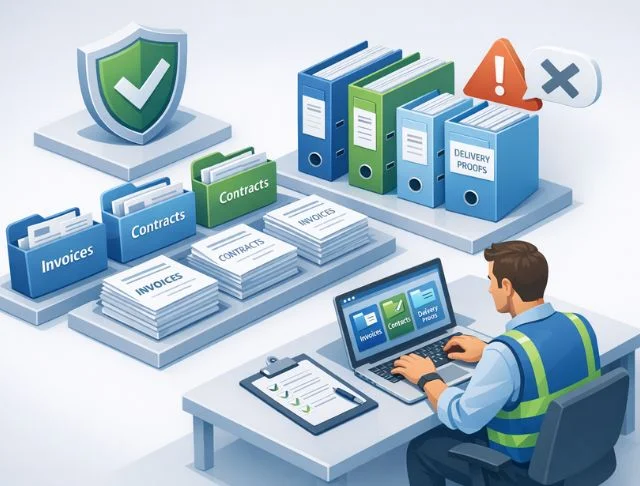
Use mobile scanning applications to digitize shipment paperwork immediately after it is issued or received. These tools allow users to capture high-quality images and convert them into structured PDFs for fast submission into brokerage systems.
Owner operators and truck drivers can send documents directly from the delivery location using mobile devices instead of waiting to reach an office scanner or back-end processing center. This reduces paperwork lag and accelerates the freight documentation cycle.
Modern freight systems increasingly integrate OCR (Optical Character Recognition) technology, which automatically extracts shipment data from documents such as rate confirmations, Bills of Lading (BOL), and Proof of Delivery (POD). This reduces manual data entry errors and improves processing speed for owner operators and truck drivers.
Owner operators and truck drivers who adopt digital document tools significantly reduce administrative workload and improve turnaround time for payments. Freight brokers also benefit because faster document submission shortens invoice processing cycles and improves cash flow predictability. Using mobile apps also confirms all shipment records are securely backed up and accessible at any time, which supports audits, compliance checks, and dispute resolution within the freight ecosystem.
Tip 10# Avoid Common Paperwork Mistakes
Avoid common documentation mistakes that can delay payments, trigger compliance issues, or create disputes within the freight system. These errors often occur during high-pressure operations when paperwork is rushed.
Typical mistakes include missing signatures, incorrect load details, mismatched shipment weights, and incomplete invoice submissions. Even small inconsistencies across rate confirmations, Bills of Lading (BOL), and Proof of Delivery (POD) documents can disrupt payment processing cycles between owner operators and freight brokers.
Within freight workflows, you should confirm that pickup details, delivery timestamps, and shipment weights remain consistent across all documents. Freight brokers often reject or flag submissions when discrepancies appear, even if the delivery itself was completed successfully.
Owner operators and truck drivers should also avoid submitting blurry or unreadable scans. Brokers rely on clear documentation for verification, invoicing, and audit readiness, so document quality directly affects processing speed.
Tip 11# Keep Records for Compliance and Disputes

Maintain long-term digital records of all shipment documents to support compliance requirements and dispute resolution processes. These records act as verified proof in case any disagreement arises between brokers, shippers, or carrier partners.
All documents should be stored in a secure digital system and organized by load number, shipment date, or customer account. This structured storage allows dispatch teams, accounting departments, and logistics managers to retrieve records quickly when needed.
Regulatory authorities and compliance agencies may also request shipment documentation during audits or inspections. Maintaining complete and organized records helps owner operators and truck drivers demonstrate operational transparency and regulatory compliance.
Owner operators who consistently maintain professional documentation records build stronger credibility within the freight ecosystem. Brokers are more likely to assign loads to carriers with a reliable documentation history. Accurate recordkeeping also enables owner operators to analyze performance trends over time, including delivery efficiency, payment cycles, and carrier reliability metrics.
Tip 12# Create a Repeatable Paperwork System
Build a repeatable paperwork workflow that standardizes how documentation is handled for every load. A consistent recording system removes guesswork, reduces operational errors, and improves efficiency across all freight activities.
Within this structured system, every load should follow the same documentation sequence, rate confirmation review, document collection, digital storage in the Transportation Management System (TMS), submission of paperwork, and final payment tracking. This maintains uniform handling across all shipments managed by owner operators and truck drivers.
Owner operators and truck drivers can further streamline operations by integrating supporting tools such as TMS platforms, mobile scanning applications, and automated invoice-trigger systems. These integrations reduce manual effort and improve processing speed across the freight lifecycle.
Owner operators and truck drivers who adopt a repeatable paperwork system operate more efficiently, experience fewer delays, and scale their operations more effectively over time. Consistency in documentation handling also strengthens trust between carriers and freight brokers.
A well-designed paperwork system transforms freight operations into a predictable, structured, and low-friction workflow, allowing owner operators and truck drivers to focus more on execution and revenue growth rather than administrative issues.
Quick Paperwork Checklist for Every Load
Every load must fulfill the paperwork checklist, which is given below.
- Rate Confirmation
- Bill of Lading (BOL)
- Proof of Delivery (POD)
- Invoice
- Carrier Insurance Certificate
- Carrier Authority / MC Number Verification
- Appointment and Pickup/Delivery Details
- Load Weight and Commodity Details
- Fuel Surcharge and Rate Breakdown
- Compliance and Safety Documents
- Dispatch Notes / Special Instructions
- Digital Load File in TMS or Storage System
Final Thoughts# Handle Paperwork Like a Professional Carrier
Handling freight broker paperwork properly helps you avoid delays, payment issues, and confusion between brokers, carriers, and drivers. This becomes much easier when you use a system like Max Dispatch, which keeps all your loads, rate confirmations, PODs, and documents organized in one place and reduces the need for manual tracking. Instead of dealing with scattered paperwork and missed details, you get a clear and simple workflow that saves time and improves accuracy. With Max Dispatch, owner operators and truck drivers can manage their operations more smoothly, stay organized, and get paid faster without unnecessary stress.