

by Faizan Hassan
March 31, 2026

Reviewed by Ford
Truck Dispatch Specialist
If you’re working in the trucking industry in the field of freight brokerage or dispatching, most probably, you have heard the term rate con. If you’re unaware of that, then you will understand it after reading this complete guide.
A rate confirmation in trucking is an essential document that shows the agreement between the broker and carrier. It includes the load details, payment records, pickup, and delivery locations.
This documented agreement helps both parties to remain committed and on the same page. In trucking, a small misunderstanding can lead to big losses, like delivery delays and payment issues.
- What Is a Rate Confirmation in Trucking?
- What Does a Rate Con Include?
- Why Is a Rate Con Important in Trucking?
- How Does a Rate Con Work? (Step-by-Step Process)
- Rate Con vs Bill of Lading (Key Differences)
- Is a Rate Con Legally Binding?
- Common Mistakes to Avoid with Rate Cons
- How to Read a Rate Con Like a Pro
- Final Thoughts on Rate Confirmations in Trucking
What Is a Rate Confirmation in Trucking?
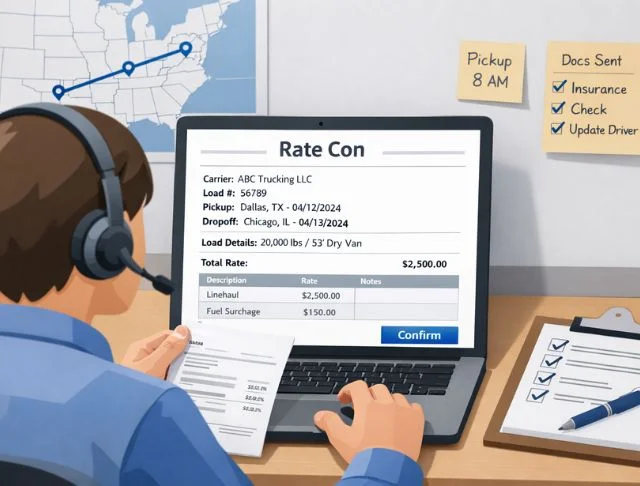
A rate confirmation is the agreement between the broker and the carrier that highlights the rate for a freight load. Usually, it is sent by the broker to the carrier after the load has been booked and the truck is dispatched.
Simple Definition of a Rate Con
A rate con is an agreement document for a load that confirms where the shipment is picked up, where it is going, and when it will be paid. This contains the essential information about the load and the official instructions in one document.
Why It’s Called a “Rate Con”
This is the short form of the “Rate Confirmation.” If someone asks you for the rate con, it means they require a rate confirmation to verify the rate and load terms.
Who Issues the Rate Confirmation
Mostly, the broker issues the rate con to the carrier. Sometimes a shipper issues it, but usually, the carrier receives the rate con from the broker.
What Does a Rate Con Include?
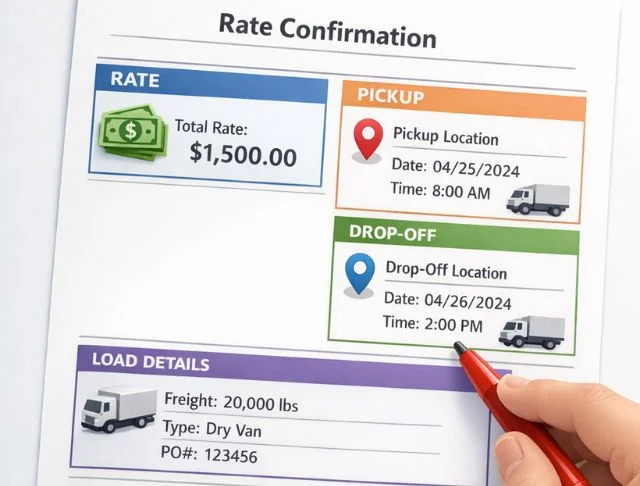
A rate con includes the key details a carrier needs to complete the load and get paid properly. This is the document that ensures the broker and carrier agree on all fields of the load.
Load Details (Pickup & Delivery Info)
Load details ease the process of pickup and delivery of the load precisely. Exact date and time and contact information ensure that the load will be delivered according to the schedule.
- Pickup address
- Delivery address
- Pickup date & time
- Delivery date & time
- Load and reference number
Freight Description and Weight
The rate con contains the freight load weight and the number of pallets. Freight description also considers any special instructions for the load.
- Freight product details confirmation
- The pallets, cases, and pieces limit
- Total weight
- Trailer type needed, such as dry van or flatbed
Agreed Freight Rate and Payment Terms
Details of the total freight payment, including payment terms, give you confidence in the business. It helps you understand the financial expectations of the broker and the carrier.
- The freight transportation rate
- Fuel surcharge rate
- Total payment
- Payment terms
Special Instructions and Accessorial Charges
Carriers may incur or handle some extra charges and requirements during operations. Carriers should know all factors that could affect the load.
- Detention
- Layover
- Extra stops
- Driver-assist
- Appointment requirements
- Detention approval rules
Why Is a Rate Con Important in Trucking?
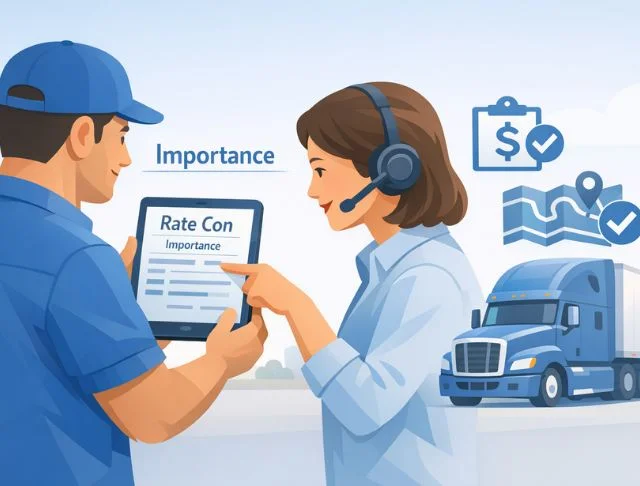
A rate con is important because it protects both parties through the freight agreement. It ensures every instruction will be followed precisely by both sides.
Legal Protection for Carriers and Brokers
A rate con gives legal protection to both sides if authorities inspect the load under regulations. The rate con will serve as proof of the agreement between the broker and the carrier.
Preventing Payment Disputes
Before booking the load, the rates and additional charges should be listed in the rate con to prevent any misunderstanding. Without a complete rate con, the carriers may begin disputes over missing detention pay, incorrect fuel surcharge, and unapproved layover charges.
Proof of Agreed Terms
For any misunderstanding, the rate con is the resolution tool between both sides because it provides the record of the load terms. If the agreement is written, it reduces misunderstanding, and the document resolves the issue.
How Does a Rate Con Work? (Step-by-Step Process)
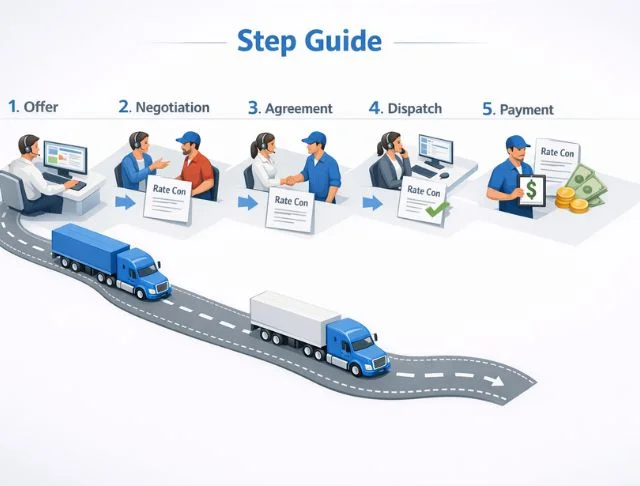
The rate con functions simply for a freight agreement between the broker and carrier. The rate con contains the pickup and delivery instructions that facilitate hauling and confirm payment through a clear process.
Load Booking Between Broker and Carrier
The broker moves the load before the carrier’s confirmation, and then prepares the rate con.
- Destination details confirmation
- Truck type
- Date and time
- Freight rate
- Additional requirements
Rate Confirmation Issued
The broker sends the rate con to the carrier via email or a trucking management system. The carrier should thoroughly check that this document contains the exact information.
Carrier Reviews and Signs
The carrier reviews the rate con and confirms the information is correct. In some cases, the carrier signs the document and returns it, but sometimes the confirmation occurs by email or through an electronic system.
Load Pickup and Delivery Execution
After accepting the rate, the carrier picks up the load and delivers it to the desired location according to the instructions. If any problem arises in this process, the rate con determines the carrier’s responsibility for delivery.
Rate Con vs Bill of Lading (Key Differences)
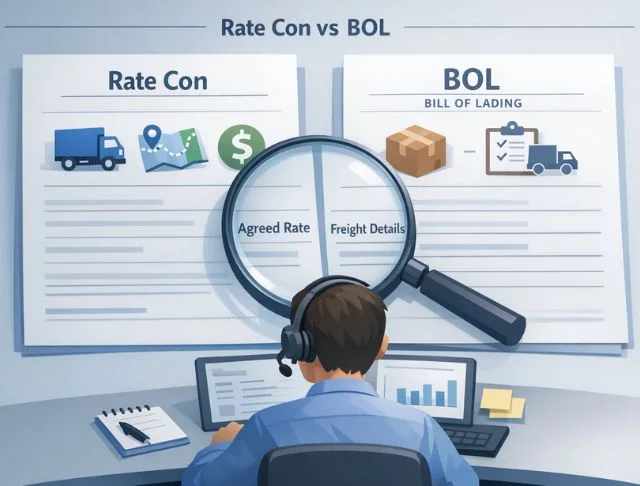
Many drivers and carriers become confused when they hear about the rate con and the bill of lading. Generally, they are not the same as some drivers think.
Purpose of Each Document
The rate con is the document that functions as an agreement between the broker and the carrier. On the other hand, the bill of lading is the shipping document that identifies the freight being transported and serves as a receipt.
When Each Is Used
The rate con is usually used when the load is booked and before it is dispatched. The bill of lading is used during pickup and delivery. The driver carries both , but they serve different purposes.
Legal Differences
The rate con shows the business terms between the broker and the carrier, and the bill of lading documents the movement of the goods. In the trucking industry, these two documents are important, but they have different roles.
Is a Rate Con Legally Binding?
The rate con can be legally binding if it covers the key components and both parties fully accept it. The terms can be applied when the situation is in accordance with the document’s legal requirements.
Contractual Elements Explained
A legal contractual element generally involves various factors that make the rate con terms compliant.
- Offer
- Acceptance
- Consideration of the value exchanged
- Clear terms
What Happens If Terms Are Violated
If any one of the parties violates the rate con terms, it can lead to a dispute.
- The carrier may claim detention for broker failure regarding waiting time terms.
- A dispute over payment terms may arise if the carrier fails to follow the pickup rules.
- There could be extra charges that were never included in the document.
Common Legal Issues
Some common legal issues arise when you agree on the rate con, so you have to be aware of them properly.
- Unclear terms
- Lack of instructions between the broker and the carrier
- Incomplete records
- Claims made after the booking
- Disputes over extra charges
Common Mistakes to Avoid with Rate Cons
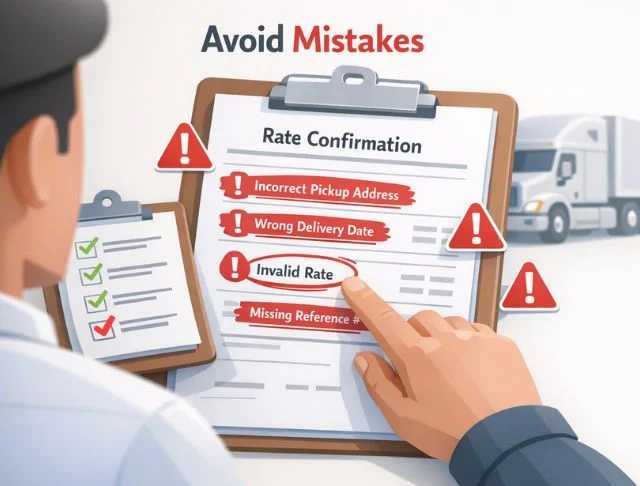
To stay safe from disputes that can create problems for continuous hauling, both parties should review the rate con thoroughly.
Not Reviewing Payment Terms Carefully
Some carriers just focus on the rate amount, and they ignore the whole fine print. This is a common mistake that leads to conflicts. There is no doubt that payment matters, such as the base rate. You should always check the essential elements to prevent disputes.
- Load payment
- Payments due date
- Fuel surcharge inclusion
- Required documents for payment
Missing Accessorial Charges
Accessorial charges can make or break your load’s profitability. If detention and layover are not clearly listed, collecting them later can be difficult.
Signing Without Verifying Load Details
Carriers should check the rate con against the agreement during booking. Make sure you’re verifying these load details before signing the rate con.
- Pickup and delivery locations
- Payment dates
- Truck type
- Weight
- Equipment requirements
- Instructions for the load handling
How to Read a Rate Con Like a Pro
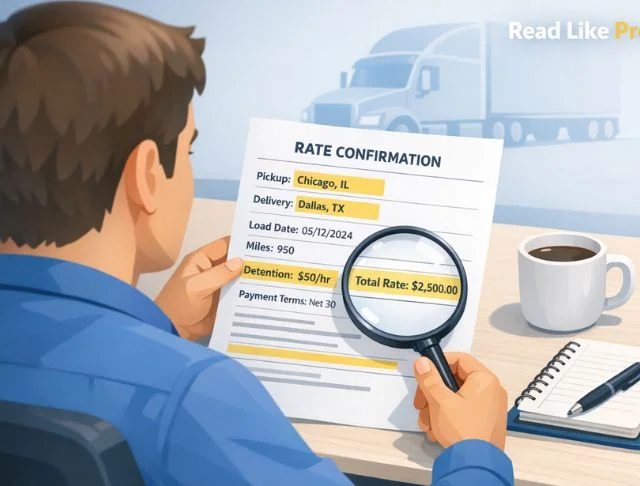
Professional carriers do not just skim the rate con; they read it like a business contract. The rate con ensures the essential information about your load, so read it thoroughly before dispatching it.
Key Sections to Focus On
There are some important sections that every carrier should focus on.
- Total rate
- Pickup and delivery time and location
- Accessorial terms
- Detention rules
- Fuel surcharge details
- Special instructions for the load
- Broker contact information
- Any unusual limitations or exclusions
Red Flags to Watch Out For
If you’re reading the rate con, you have to watch out for issues that might disrupt your hauling operation.
- Payment terms that do not match the wording of the agreement
- Wrong locations and unclear addresses
- Unclear language about detention or layover
- Missing all-inclusive charges rule
- Changing the rate after booking
Negotiation Opportunities
You can negotiate before accepting the load. It is possible to ask for some things you may need to resolve in the agreement.
- Extra charges for difficult routes
- Waiting time protection
- Clear language for detention
- Clarification for fuel surcharge
- Layover terms with guarantee
Final Thoughts on Rate Confirmations in Trucking
For most carriers, the rate con is a simple document, and they don’t treat it as an important agreement. However, it is an important business document that shows how the freight is transported and paid for.
Why Every Carrier Must Understand Rate Cons
Every carrier should know how to read the rate con because this is essential for your business. It prevents disputes and protects your business revenue. It creates clarity between the broker and the carrier. In the trucking industry, clarity helps increase profit for your business.
Quick Recap of Key Points
A rate con is the written agreement between the two parties for a freight load. It includes several important pieces of information about the load, like freight rates, payment terms, and load instructions.
It is crucial because it prevents conflicts and supports legal clarity in the business. If you understand the rate con, you grasp the most important parts of trucking business operations. In this industry, that kind of knowledge is extremely valuable.